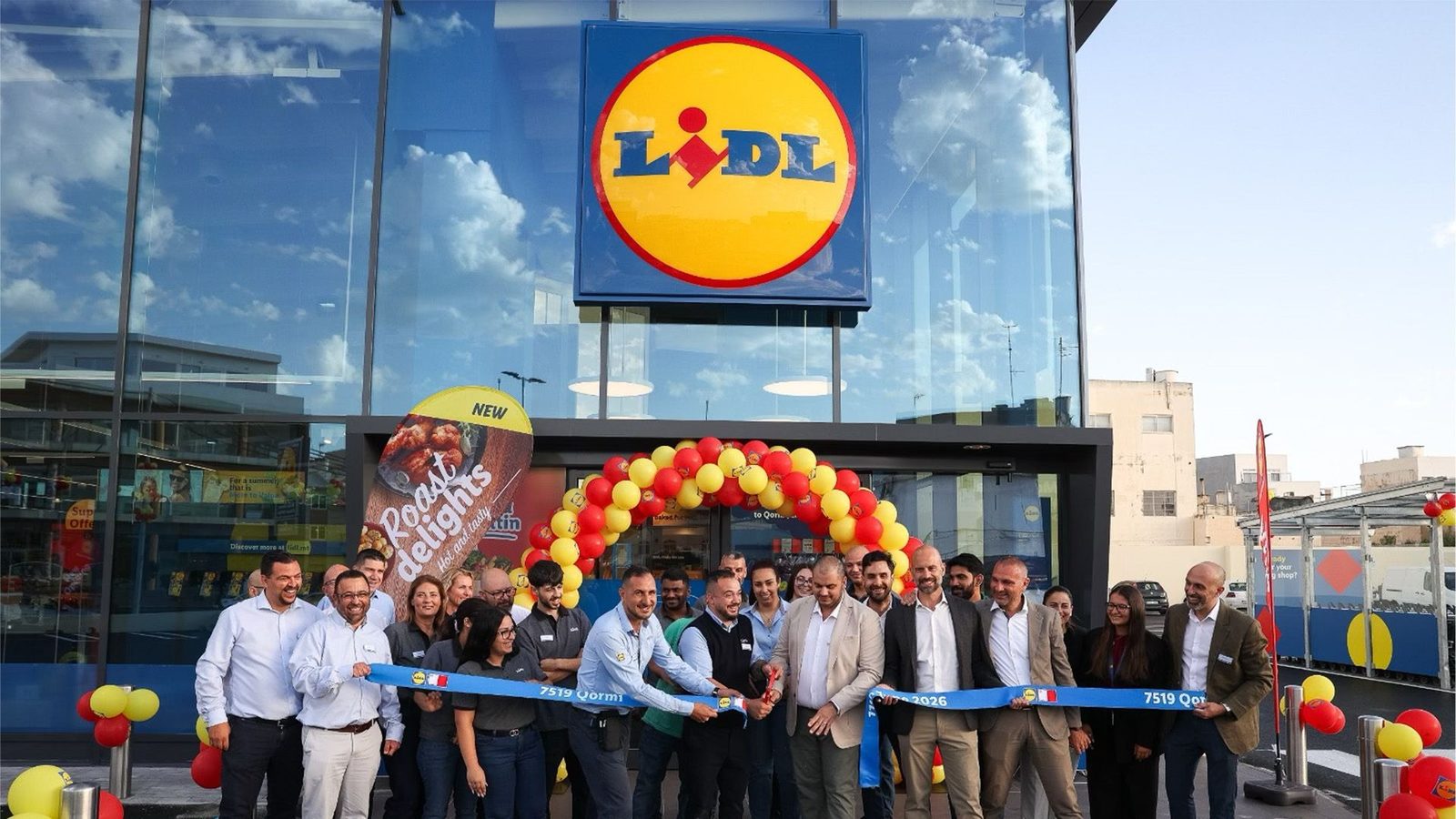
Lidl Malta has opened its twelfth store on the islands, on Triq l-Imdina in Qormi, in the centre of Malta. The German discounter, which describes itself as Malta's number one retailer, has been present in the country for 18 years.
The new store has a sales area of almost 1,500 square metres with around 500 metres of shelving, and more than 120 parking spaces. It is the first in Malta to use Lidl's updated store layout, which the company said is designed to make navigation more intuitive, with fewer touchpoints and clearly defined areas. Related products are grouped together in themed sections, such as fresh produce and bakery. The store also features digital screens, integration with the Lidl Plus loyalty app and redesigned self-service checkouts intended to speed up the exit.
Lidl said each new store opening creates more than 30 jobs, and that its team in Malta now exceeds 550 people. The company also works with more than 30 local suppliers and producers, and said its growing store network increases demand for locally sourced products.
The Qormi store will take part in the company's Feed it Back programme and offer Food Saving Bags, both aimed at reducing food waste and supporting people in need.
Owen Micallef, director of Lidl Malta, described the opening as a celebration of the relationship the company has built with the Maltese public over nearly two decades. He said being the country's leading retailer was a responsibility the company took seriously, and that its growth was intended to provide jobs, support local producers and fund sustainability initiatives.
The opening adds to a fast-growing supermarket sector. Research presented at a Malta Business Network event in November 2026 showed the islands now have 55 supermarkets, up from 35 in 2010, with several more under construction or awaiting planning approval. Lidl competes with local chains such as Pama, Welbee's, The Convenience Shop group and SPAR, as well as Italian discounter Eurospin, which entered Malta in recent years.
Malta's Central Bank has noted that food retailers face increased competition from foreign-owned chains and low-priced own-brand products, a description that fits Lidl's model of a focused range built around private labels.