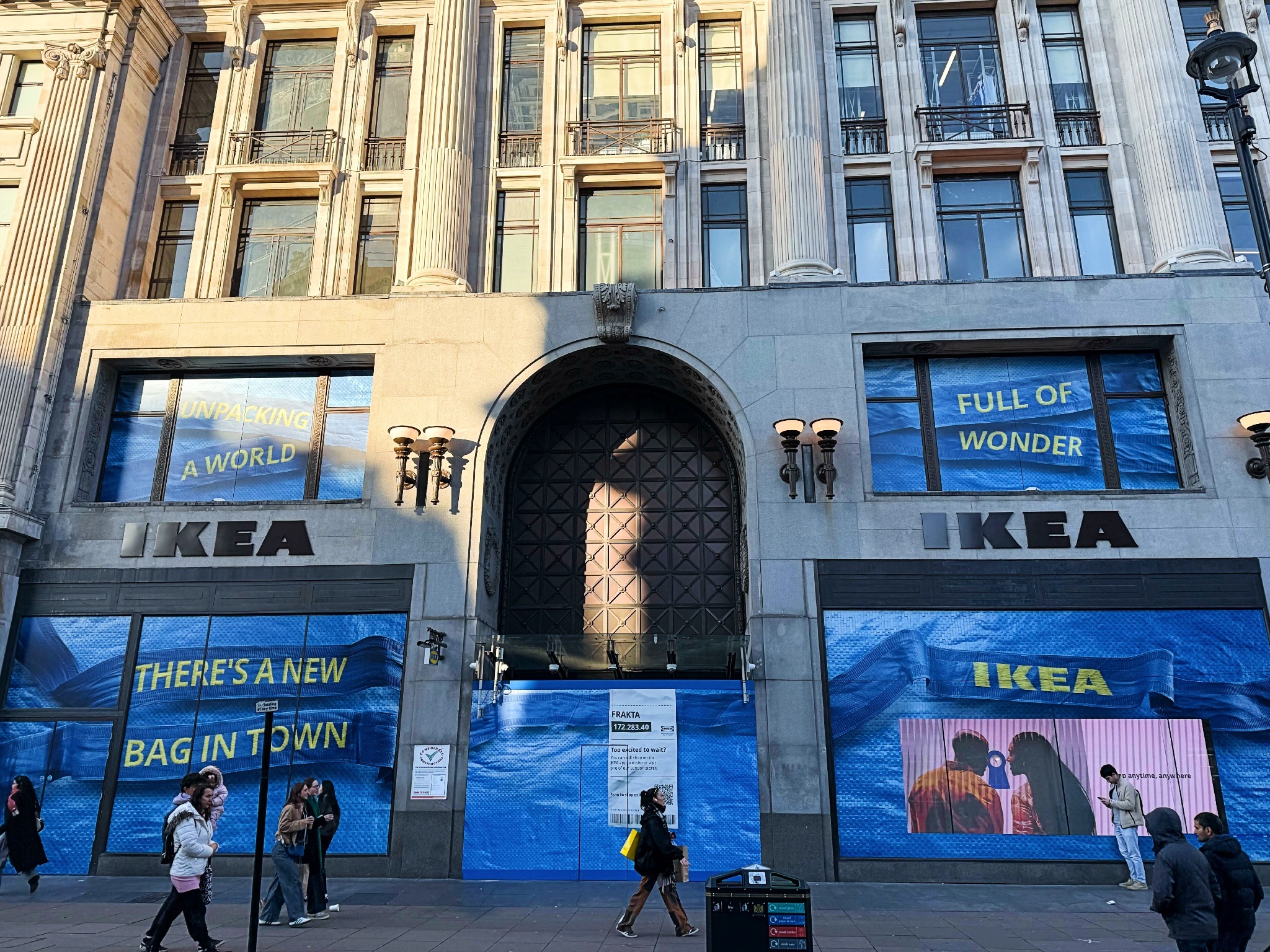
IKEA, one of the world’s leading furniture retailers, is entering a new phase in its store strategy in response to changing consumer habits and the rising cost of living. Alongside its large out-of-town stores, the company aims to boost customer traffic by putting more weight on smaller outlets and city-centre locations.
According to Reuters, Ingka Group, which runs most of IKEA’s global store operations, is preparing to diversify its store formats to return to growth after a third consecutive year of falling sales.
Manhattan and London Point to the New Strategy
IKEA will strengthen its city-centre presence with a new store in New York’s SoHo district, scheduled to open early next year. The positive contribution of its Oxford Street store in London to UK sales is also cited as a key example of the strategy.
Post-pandemic changes in shopping habits and rising fuel costs are affecting how often consumers visit IKEA’s large out-of-town stores. With smaller store formats, the company plans to offer customers easier access for their daily and monthly shopping.
Ingka Group CEO Juvencio Maeztu says large stores will remain the foundation of the business, but the company will develop more convenient store formats in line with consumer needs.
Three Years of Falling Sales Accelerate the Search for a New Approach
Ingka Group posted sales of €38.8 billion in the 2026 financial year ending 31 August, compared with €39 billion the previous year, marking a third consecutive year of decline.
Store visits also fell slightly. The number of visitors to IKEA stores declined to 729 million in the 2026 financial year from 739 million the previous year, while visits to online channels rose to 4.2 billion.
This picture shows that, despite IKEA’s strong reach in digital channels, it needs to increase physical store traffic again.
Space for Other Retailers in IKEA Stores
IKEA’s new strategy is not limited to changing store sizes. The company plans to boost visitor traffic by bringing other retail brands into its existing large out-of-town stores.
One example of this approach is the Decathlon outlet that opened in the IKEA store in Croydon, UK. Ingka Group wants to make its stores part of a broader shopping experience by bringing different retailers together in the same location.
€1.2 Billion in Price Cuts Across Europe
Alongside the change in store strategy, IKEA is also working to strengthen its price competitiveness. In September, the company announced new price cuts worth €1.2 billion across Europe.
Pressure on consumers’ spending power from inflation, rising rents and mortgage costs is making IKEA’s affordable pricing policy all the more important.
Maeztu highlights the weight of housing costs on household budgets, particularly in Europe, stressing that the company needs to offer more affordable prices.
Profit Up Despite Cost Cutting
Under new CEO Juvencio Maeztu, the company has cut at least 1,000 jobs since the start of the year to keep costs under control.
Despite the decline in sales revenue, Ingka Group’s net profit rose from €1.4 billion to €1.9 billion. Proceeds from the sale of three shopping centres in China played a significant role in the increase.
IKEA’s new approach points to a transformation that, without abandoning large-format retail, moves towards city centres, smaller store formats and partnerships with other retailers. The company aims to turn its physical stores from places where products are simply bought into accessible shopping spaces closer to consumers’ everyday lives.
Source: Reuters