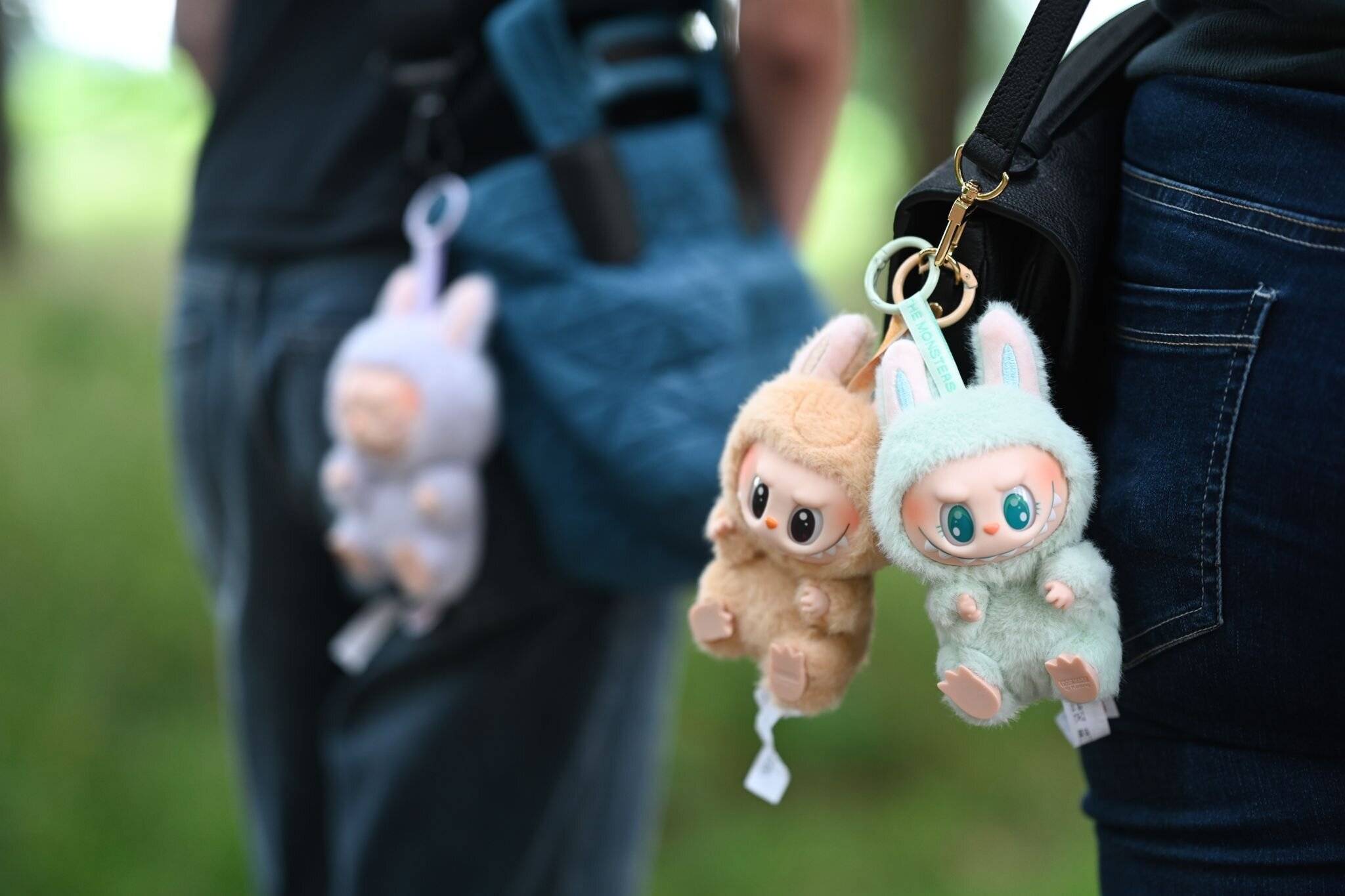
Labubu, which once drew queues outside stores, was the subject of millions of social media posts and fetched high prices on the resale market, is losing momentum. But the consumption model Labubu represents is not going away. The blind box economy is moving beyond toys and creating a new growth area in sectors such as beauty, fashion, food and accessories. So what should the retail sector learn from the craze?
Appearing on handbags, in shop windows, in social media posts and even on resale platforms, Labubu became one of the most striking phenomena in global consumer culture. That a toy figure reached such a wide audience was the result not only of successful product design but also of a business model that read consumer behaviour correctly.
However, the saturation that follows every rapid rise has begun to show for Labubu too. The queues, limited stock and high resale prices of the early days no longer generate the same excitement. The slowdown in Pop Mart’s sales performance is one of the key indicators of this change.
So has Labubu really fallen out of favour, or are consumers looking for a new thrill?
The answer lies not only in the future of a toy brand but in how the retail sector will take shape in the period ahead.
How did Labubu become a global phenomenon?
Labubu’s story goes back to The Monsters family of characters created in 2015 by Hong Kong-born artist Kasing Lung. When Pop Mart turned these characters into collectible figures, Labubu moved from the world of art and design to the centre of commercial retail.
The global explosion did not happen overnight, however. A process that began as Pop Mart grew its collectibles business and developed different character series gained international momentum in 2024, when BLACKPINK member Lisa showed off Labubu figures in her social media posts.

Posts by celebrities and influencers quickly turned the product into much more than a toy. Used as bag charms, the figures became a fashion and status symbol, particularly among young consumers.
2025 was one of Labubu’s strongest years commercially. Limited-edition collections, rare figures and the blind box system, in which buyers do not know which character is inside, fuelled repeat purchases.
Pop Mart’s 2025 financial results reflected this growth. The company’s annual revenue rose from 13.04 billion yuan in 2024 to 37.12 billion yuan in 2025. Revenue from The Monsters character family reached 14.16 billion yuan, accounting for around 38% of the company’s total revenue.
Labubu thus became not just a successful toy but a business model cited globally as an example of character creation, collection building and consumer community development.
Why is the Labubu buzz fading in 2026?
Some of the factors that drove Labubu’s rise are now also playing a role in its waning popularity.
According to a Financial Times report published at the end of October 2026, Pop Mart’s third-quarter sales fell 45–50% year on year. A decline of 70–75% in the Americas points to demand normalising, particularly in global markets.
It would be wrong to read these figures as Labubu having fallen completely out of favour. But it is clear that after a period of extraordinary growth, consumer interest has begun to shift.
There are several key reasons behind this change.
Weakening perception of rarity: Labubu’s early appeal was closely tied to how hard it was to get hold of. Limited stock and rare figures increased the value consumers placed on the product. But as production and distribution expanded, this sense of exclusivity began to fade.
Speculation in the resale market: Some Labubu figures sold for far more than their retail price. This turned a collectible into an investment vehicle, and as speculative demand fell, prices retreated. The gap between the product’s real consumer value and its resale price became more visible.
Social media saturation: Social media was one of the most important channels in driving Labubu’s popularity. But seeing the same product everywhere erased the initial sense of discovery and differentiation. The visibility that comes with going viral can, at some point, turn into consumer fatigue.
The emergence of new trends: Consumer interest changes very quickly, especially among younger audiences. A product that everyone once wanted can drop off the agenda as soon as a new character or collection appears.
The important point here is that Labubu’s declining popularity does not mean the blind box model has failed. On the contrary, the fact that the model is reappearing in new applications across different sectors suggests the consumer behaviour may be lasting.
After Labubu, blind boxes keep growing in other sectors
A blind box is a sales model in which consumers do not know exactly what they are buying in advance. Today, however, the approach is no longer limited to toys and collectible figures.
Brands are bringing the element of surprise to different categories to drive product discovery, customer acquisition, loyalty and social media engagement.
Beauty and personal care: Cosmetics is one of the categories to which the blind box model can be adapted most quickly. Gisou’s HoneyPups surprise box and Emi Jay’s blind box collection of hair accessories are among the examples of this approach outside toys. For beauty brands, the model is becoming a marketing tool that encourages consumers to try different products and discover new ones.
Grocery retail: Aldi in the US attracted attention in 2026 with surprise boxes combining different product groups. The boxes, made up of snacks and protein- and fibre-focused products, were offered to consumers without their contents being fully disclosed in advance. The first boxes sold out quickly and new ones were prepared, showing that the model can also work in grocery shopping.
Fashion and accessories: Bag charms, jewellery, hair clips, socks and small lifestyle products are among the categories suited to blind boxes. Brands targeting young consumers in particular can differentiate the shopping experience by combining limited-edition collections with surprise packs.
Jewellery: Zales’ Sweethearts collection is one example showing that the surprise box approach can also be used for higher-priced products. In the collection offered around Valentine’s Day, consumers found out which message-bearing heart-shaped piece they had received only when they opened the box.
Toys and licensed products: Pokémon cards, collectible figures and products based on different character universes remain core categories of the blind box economy. Labubu’s success has also increased the importance of new collections and character collaborations in this area.
What these examples have in common is that, rather than imitating Labubu, brands are adapting the consumer behaviour behind it to their own categories.
Why do blind boxes create such powerful consumer behaviour?
In traditional retail, consumers go into a store knowing what they will buy. They examine the product, compare prices and decide according to their needs. In the blind box model, however, there is an experience between the purchase decision and the reveal of the product.
This experience triggers four key motivations.
Curiosity and surprise: Because consumers do not know what is in the box, they experience anticipation after purchase. Opening the box becomes as important as the shopping itself.
The urge to complete a collection: The desire to own every piece in a series encourages repeat purchases. This motivation is even stronger in collections that include rare items.
Social interaction: Sharing, swapping and comparing what comes out of the box with other consumers creates a new community behaviour. Part of the brand’s marketing is thus carried out through consumer-generated content.
Product discovery: In categories such as cosmetics and food in particular, consumers may come across products they would not normally choose. For brands, this means an opportunity to introduce new products and cross-sell.
However, the model also carries risks. The desire to get hold of rare items and repeat purchasing behaviour can lead consumers to overspend. This becomes even more important for collections aimed at children and young people. Brands therefore need to respect consumer trust and responsible marketing principles when using the element of surprise.
A history of the blind box: from Japan to global retail
The roots of blind box culture go back to Gashapon capsule toys, which became widespread in Japan in the 1960s. In this system, consumers bought a capsule without knowing which figure they would get, combining the thrill of surprise with collecting.
In the 1990s, collectibles such as Pokémon cards brought this behaviour to a wider audience. Pop Mart, founded in China in 2010, then turned the model into a modern retail business by combining designer characters with the surprise box system.
Labubu became one of the strongest representatives of this model, which grew globally in the 2020s under the influence of social media. An idea that began with capsule toys in Japan thus became a major market where the character economy, collecting culture and social media engagement converge.
What should retail take away from Labubu?
The Labubu example does not just teach retailers a new sales technique. It also holds important lessons in product development, brand management, customer experience and community building.
Create a story before the product.
Labubu’s success was not built on the surprise box alone. The character had its own distinctive design, personality and collectible world. The blind box was the tool that scaled this story commercially.
Brands cannot achieve similar success simply by hiding what is in the box. They need to create a product, character, theme or experience that consumers can connect with.
Do not confuse perceived scarcity with sustainable demand.
Limited production can accelerate the first wave of purchases, but it cannot by itself determine a product’s long-term value. Persistent stock shortages can frustrate consumers. On the other hand, flooding the market can destroy the sense of exclusivity.
Not every category suits blind boxes.
In categories where consumers are looking for a specific product, size, colour or function, uncertainty can create dissatisfaction. It is perfectly natural, for instance, for a consumer not to want a care product they need to be chosen at random. Surprise boxes are therefore better positioned as a complementary experience rather than a substitute for essential products.
Stores should be experience spaces, not just points of sale.
Stores, vending machines and unboxing experiences played an important role in Labubu’s success. Retailers can also create surprise product stations, seasonal collection corners and dedicated launch areas in store. Such initiatives can support footfall, especially in shopping centres and locations with a high concentration of young consumers.
Data should be at the heart of collection management.
Retailers should track which products are in highest demand, which series sell out fastest, which items consumers swap and which collections they are trying to complete. This data can provide valuable insight for new product development and stock planning.
Where are the opportunities in Türkiye?
In Türkiye, three areas in particular could be said to hold potential for the development of the blind box model.
The first is beauty and personal care. Beauty brands could create boxes that combine different product groups, support new product discovery and are refreshed with seasonal themes. Combined with loyalty programmes, this approach could become even more meaningful.
The second is grocery retail. Supermarket chains could prepare surprise packs to introduce new products, showcase local producers or bring different categories together at certain times of the year. A discovery box featuring local snack brands, for example, could introduce consumers to new products while giving small producers visibility.
The third is fashion and lifestyle retail. Surprise packs could be created in categories such as socks, accessories, jewellery, small home décor items and collectibles. Brands targeting young consumers in particular could combine this model with limited-time collections.
However, the success of such initiatives in Türkiye will not depend solely on social media visibility. Price sensitivity, the perceived value of the product, the quality of what is delivered and consumer trust will be decisive.
Retail EMEA’s View
The most striking aspect of the Labubu story is not how many units a toy character sold, but how the experience consumers expect from shopping has changed.
For many years, the main competitive arenas in retail were price, product range, location and accessibility. With digitalisation, speed, convenience and personalisation also moved to the centre of competition. Today, the emotional bond consumers form with a brand, turning shopping into entertainment and creating shareable experiences are becoming increasingly important.
The blind box is one of the commercial tools of this transformation. But not every brand needs to create a Labubu, nor does every product need to be turned into a surprise box. The real opportunity lies in developing new experiences that get consumers interacting with the brand.
For a cosmetics brand that might mean new product discovery; for a supermarket chain, the chance to try different flavours; for a fashion brand, a limited accessory collection.
Labubu’s popularity may fade. Another character, another collection or another viral product may take its place. But consumers’ desire to be curious, to discover, to share and to build a collection of their own will not go away.
The most important lesson for the retail sector is this: the successful brands of the future will compete not only on what they sell, but on the experience they give consumers.
- Pop Mart – 2025 Annual Financial Results (2025 revenue and performance of The Monsters character family).
- Associated Press – Pop Mart shares sink despite revenue surge, as analysts say Labubu reliance worries investors (25 March 2026).
- Financial Times – Pop Mart sales fall up to 50% as Labubu fever ebbs (October 2026).
- Bloomberg / Business of Fashion – Pop Mart Quarterly Sales Fall Up to 50% as Labubu Fad Cools (27 October 2026).