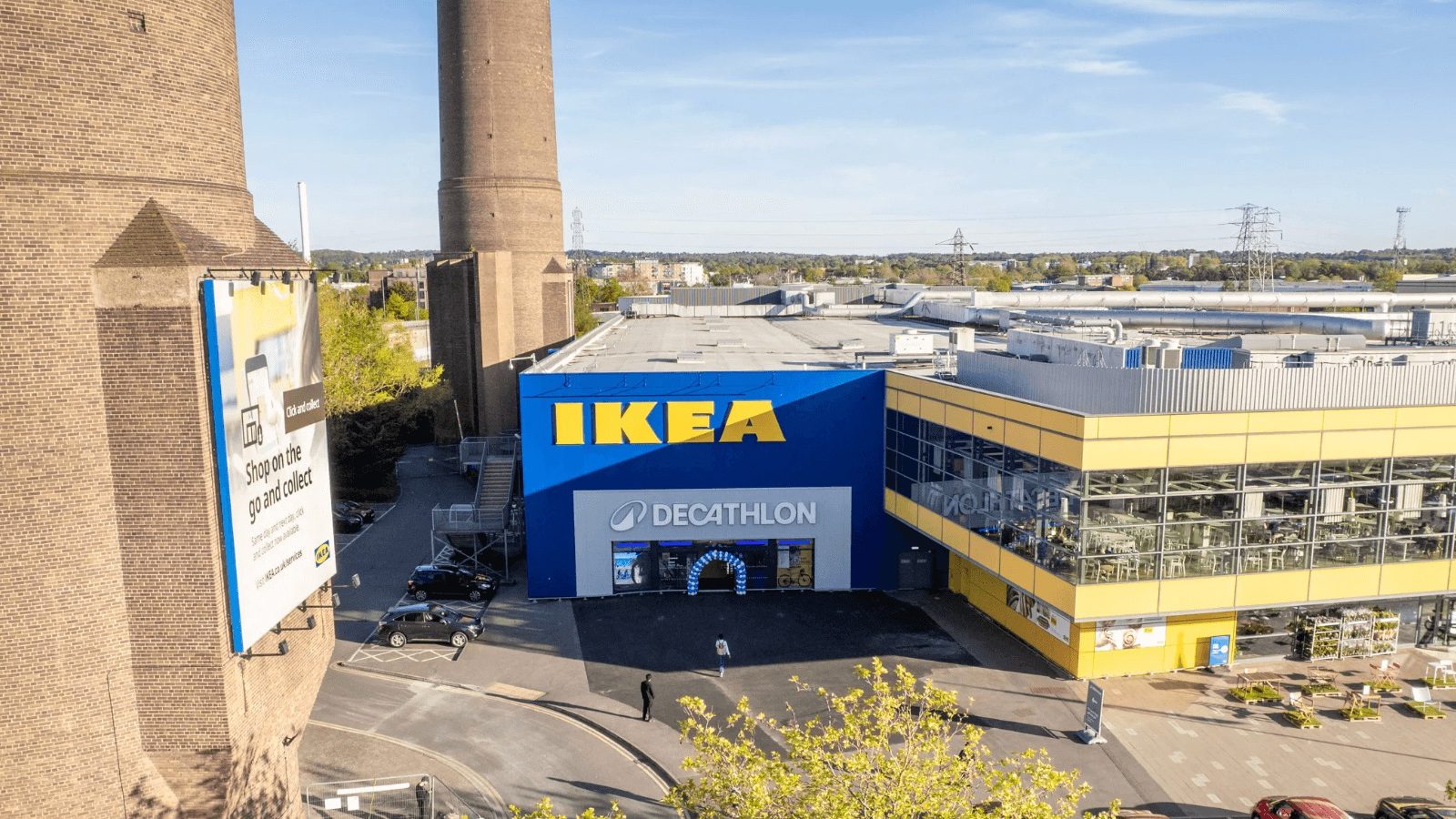
Ingka Group, IKEA's largest franchisee, has begun trials to make room for third-party brands in its giant stores. The first step comes in the United Kingdom with sports retail heavyweight Decathlon.
According to Reuters, Decathlon will operate a 1,188 m² space inside the 25,000 m² IKEA store in Croydon, south London, this spring. The store, run under a space-rental model, will have its own entrance.
The aim: better space productivity and more footfall
"We believe complementary brands can attract more visitors to our stores and allow customers to interact with products in new ways," Ingka Group Chief Commercial Officer Javier Quiñones told Reuters.
The company aims to use its existing floor space more efficiently and, in particular, to win back increasingly price-sensitive consumers. With operations in 32 countries, Ingka is IKEA's main franchisee. Last year the group reported its weakest annual sales performance since 2021, although global footfall rose by 1.3%. The company wants to accelerate that growth.
From "blue box" to multi-brand experience
Over the past decade IKEA has been transforming not only its product range but also its store formats. Smaller city-centre stores and showrooms have been introduced and investment in digital channels has increased, while price cuts have sought to strengthen the brand's budget-friendly image.
The Decathlon partnership marks the first time a major international brand has moved into a classic IKEA "blue box" store. Previously, Nordic electronics retailer Kjell & Company opened smaller-scale shops in two IKEA stores in Sweden.
Signals for Europe and North America
Ingka Group says it is considering similar rental models in some countries in Europe and North America. A conversion is also under way at the IKEA store in Klagenfurt, Austria, which will house home and garden retailer Thomas Philipps.
The company plans to invest more than EUR 5 billion in new locations and upgrades to existing stores over 2024–2026.
Retail EMEA's view
IKEA's Decathlon move points to a new era in retail in which the classic "anchor tenant" model is turned on its head. It is no longer IKEA inside a shopping centre; it is a mini multi-brand set-up inside IKEA.
The step is as much a strategy to extend the customer journey as it is about space productivity. The sports category can naturally add family, youth and active-lifestyle segments to IKEA's footfall. At a time when value-focused consumers are on the rise, bringing two strong price propositions under one roof is particularly notable.
For other markets the question is clear: as rent pressure grows, how ready are large-format stores for a similar "store-within-store" model? We may see this model more often across different categories in the coming period.