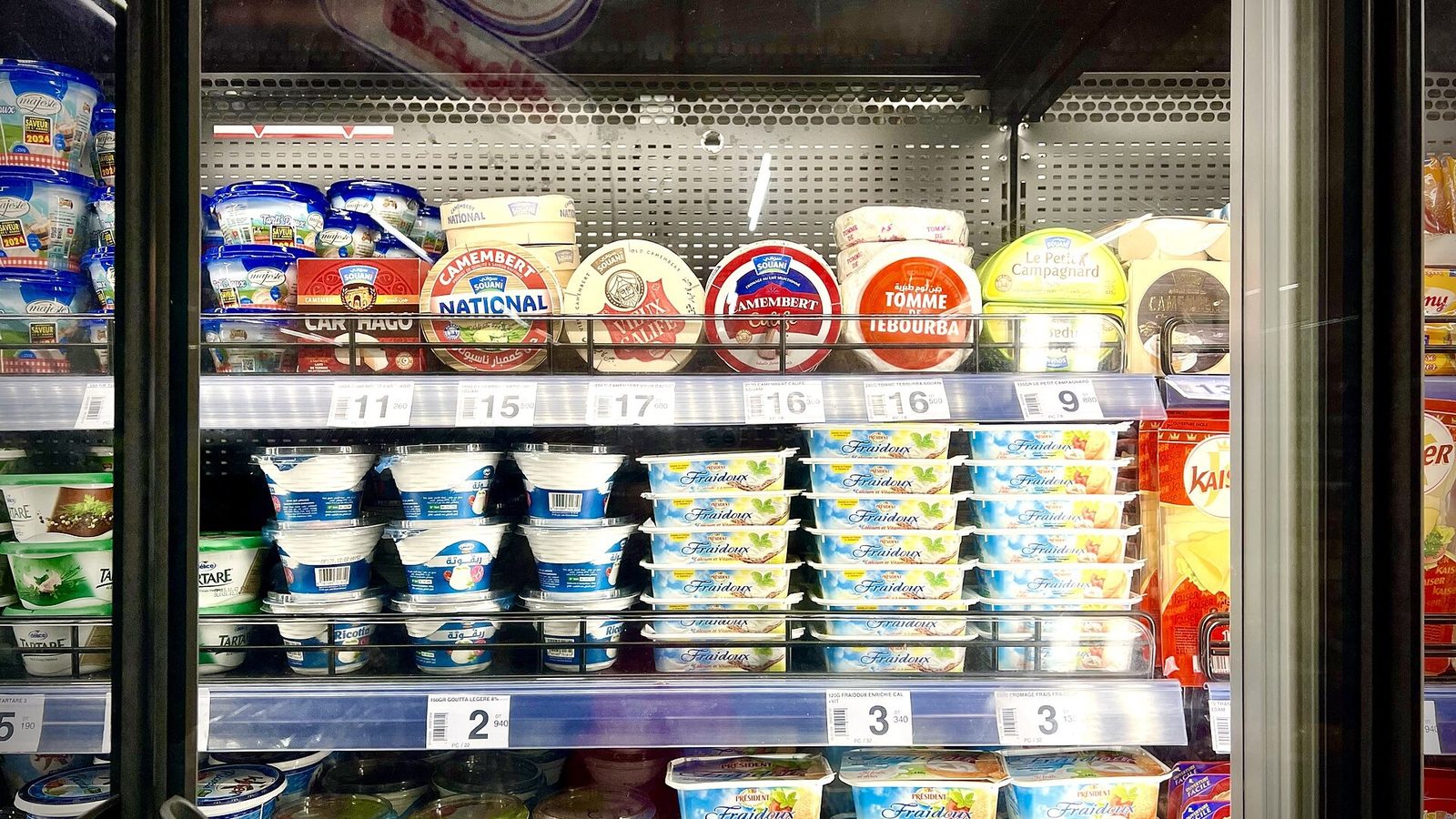
Tunisia's large-format grocery retailers have defended their pricing practices and their role in the domestic supply chain, as household budgets come under pressure ahead of Ramadan.
Speaking on Jawhara FM on 23 February 2026, Hédi Baccour, president of the Chambre syndicale des grandes surfaces, the professional body representing supermarket and hypermarket operators, said that 83% of the sector's turnover comes from Tunisian-made products, with imports accounting for the remaining 17%, according to a report by Business News. He rejected claims that imported products had flooded store shelves, arguing that their prominence on display gives a misleading impression and that price remains the deciding factor for most shoppers.
Baccour presented large retailers as a moderating force on prices, particularly at the start of the month when salaries are paid, through targeted promotions organised with suppliers and manufacturers. He cited olive oil as an example, saying chains had offered it below prevailing market prices, and had introduced a lower-priced format this year.
He also addressed the controversial practice of back margins, the deferred payments that suppliers make to retailers in exchange for promotional and commercial services. Baccour said the practice also exists internationally and that margins, whether front or back, mainly serve to cover costs such as wages and commercial cooperation. He said the business model depends on margin rather than volume.
On Ramadan trading, Baccour said real consumption rises by around 25% during the holy month rather than increasing exponentially, with purchases concentrated before and at the start of the period. He argued that extending opening hours late into the night would not be economically viable, as wage, transport and security costs would rise faster than sales.
Affiliated chains employ around 12,000 people, according to the chamber, and the sector signed a collective agreement with unions in coordination with the UGTT labour federation in May 2025. Baccour said activity had returned to 2019 levels in 2023. Tunisia's modern grocery sector, led by Carrefour, Magasin Général, Monoprix and hard discounter Aziza, still accounts for a minority of national retail sales.