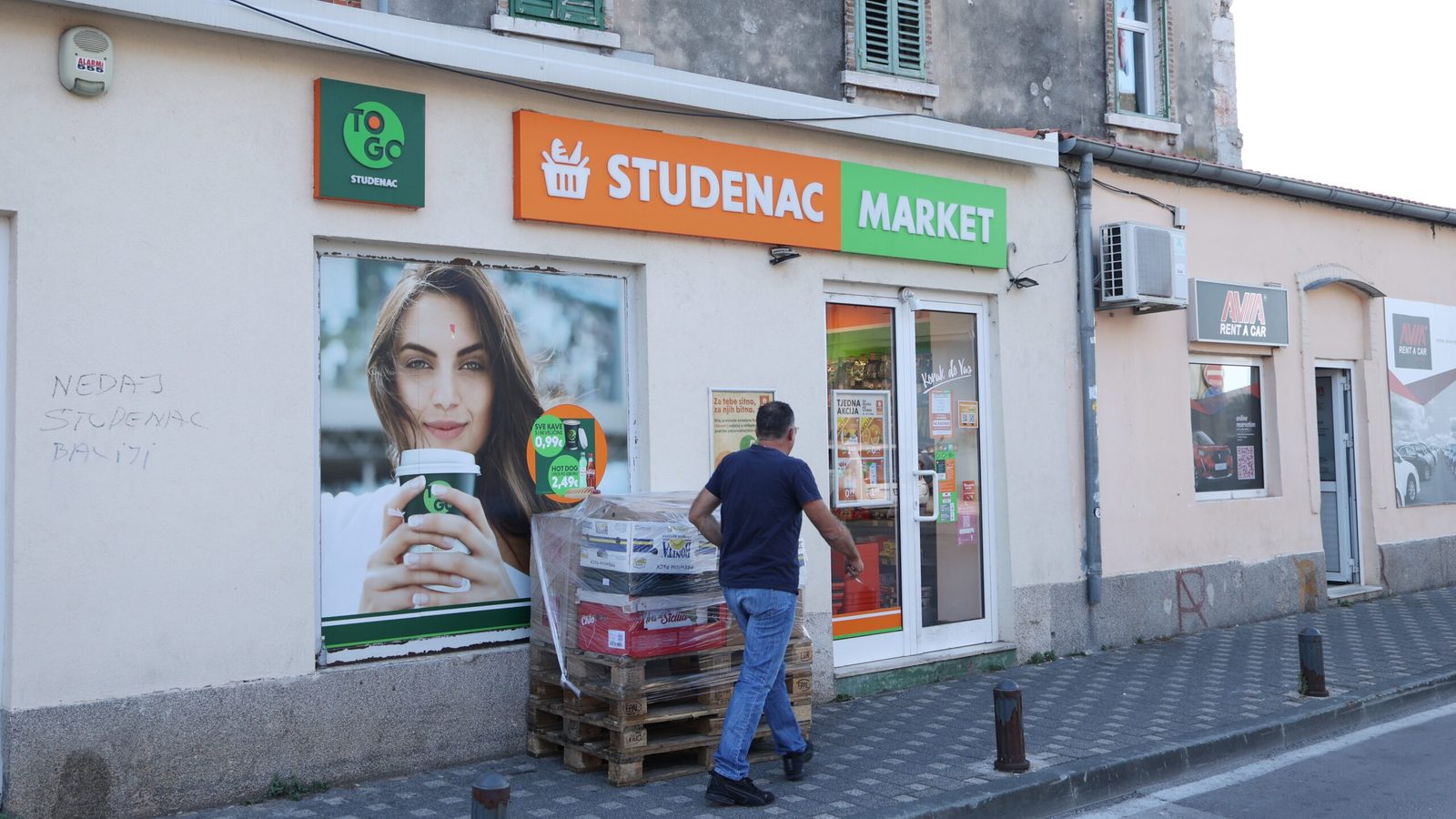
Studenac, the Croatian grocery chain with the largest store network in the country, has filed a proposal to open pre-bankruptcy proceedings after struggling to meet its financial obligations, state news agency Hina reported on 25 September 2026. The company said it had been unable to agree extensions to its existing credit arrangements and had begun preparing a restructuring plan, with the aim of reaching agreement with banks, suppliers and other creditors.
Data from financial agency Fina showed that the company's bank account had been blocked, although Studenac said its stores remained open and trading continued. The chain operates more than 1,400 stores across Croatia, many of them in small towns and coastal communities, and employs more than 7,000 people.
Studenac grew rapidly through acquisitions and new openings after Polish private equity firm Enterprise Investors bought it in 2018 through its Polish Enterprise Fund VIII. A planned stock market flotation in 2024 did not go ahead, leaving the company to continue expanding without the equity an IPO would have provided. In 2025 revenue rose 12.7% to €854.4m, but the company recorded a net loss of €30.6m. EBITDA fell from €65.8m to €51.8m, and operating profit of €22.5m turned into a €5.4m loss. At the end of the year, bank debt stood at about €288.9m, with a further €160.5m of loan liabilities.
Local media reported that the company had failed to repay a €28.5m revolving credit line due in early September. One creditor separately asked the commercial court in Split to open full bankruptcy proceedings, and creditors were later invited to register claims by 28 October.
Economist Damir Novotny attributed the situation to an expansion strategy that had not paid off and weak profitability. He outlined possible routes out, including a debt reduction agreed with creditors, a substantial capital injection by the owner or the arrival of a strategic investor, possibly accompanied by fewer stores, job cuts and more automation.