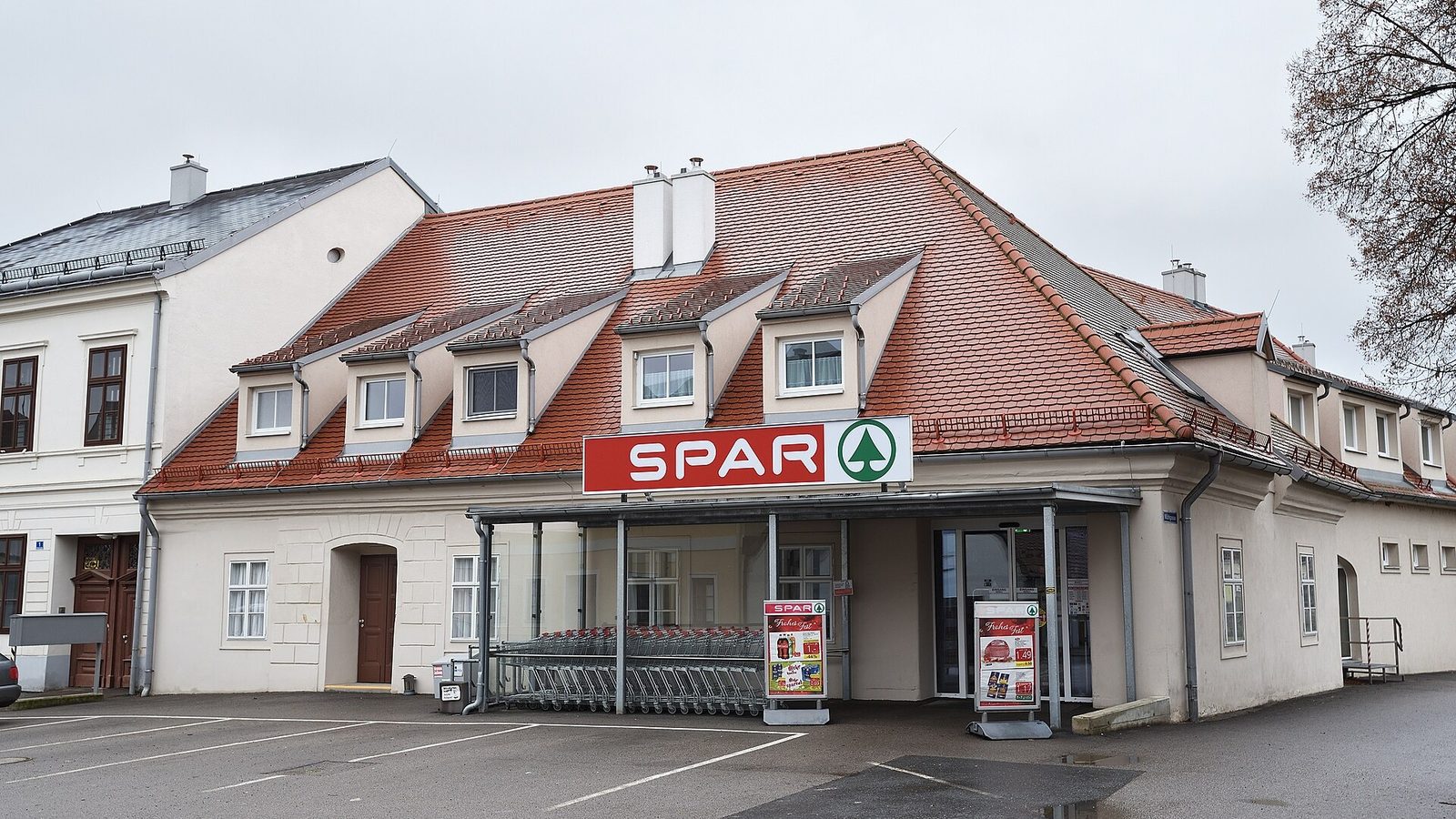
Spar has further strengthened its position as Austria's largest grocery retailer, according to NielsenIQ market-share figures for the first seven months of 2026 reported by the trade publication KEYaccount and Leadersnet in early September.
Between January and July, Spar accounted for 36.9% of Austrian food retail sales, a gain of 0.9 percentage points on the same period a year earlier. The Rewe group, which includes Billa, Billa Plus, Penny and Adeg, came in at 32.1%, down 0.4 points. That leaves a gap of 4.8 points between the two market leaders, which have been locked in a close contest since Spar overtook Rewe at the top of the ranking in 2020.
The two discounters, Hofer (the Austrian arm of Aldi Süd) and Lidl, are reported together by NielsenIQ. Their combined share rose by 0.3 points to 26.0%. Markant, the grouping that includes the Nah&Frisch independents, dropped from 2.1% to 1.4%, while the remaining market, made up mainly of the Tyrolean chain MPreis, held at around 3.6%.
The decline in Markant's share is largely a consequence of the end of Unimarkt, which stopped trading as a supermarket chain at the end of 2025. NielsenIQ had classified Unimarkt under Markant, and part of the former Unimarkt estate was taken over by Spar and Rewe.
Figures for July alone painted a slightly different picture. In that month Rewe's share rose by 0.5 points to 32.2%, while Spar edged up only 0.1 points to 37.2%. The report noted that the comparison is distorted by a base effect: in July 2025 a controversy over Billa's discount-sticker promotion had cost Rewe customers and pushed shoppers towards Spar.
Overall, the publication concluded that Spar again grew faster than the market as a whole. The article also mentioned unconfirmed speculation that Rewe could be interested in taking a stake in MPreis, which neither company had commented on.
The data underline how concentrated Austrian grocery remains, with the three groups of Spar, Rewe and the two discounters together accounting for around 95% of sales, a structure that has drawn attention from consumer groups and the competition authority in the debate over food prices.