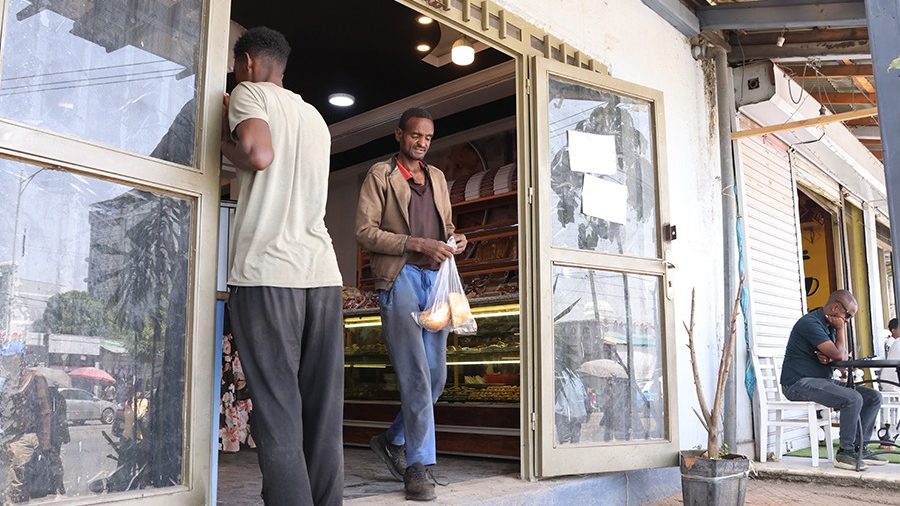
Rising food prices are forcing households in Addis Ababa to change the way they shop, with bread and flour among the products causing the most concern, according to a report by Ethiopian business weekly Capital published on 8 November.
Official data from the Ethiopian Statistics Service show that annual inflation stood at 14.9% in September 2026, up from 13.2% a year earlier, and that prices rose 1.8% between August and September. Food and non-alcoholic beverages were 14.8% more expensive than a year before. Meat prices were up 22%, cooking oils and fats 18.2%, dairy and eggs 17.7% and vegetables 11.4%, while cereals, bread and pulses rose a more modest 8.6% on the year.
On the ground, however, shoppers described steeper rises. A mother of four in Lemi Kura sub-city told the newspaper that the bread she bought for 60 birr three months earlier now cost 100 birr. A government employee in Kotebe said his family had cut its daily bread purchase from five loaves to three. At Shola Market, a shopkeeper said wheat flour had risen from 130 to 145 birr per kilogram in two weeks, with a 100kg bag approaching 14,000 birr wholesale. He said customers who once bought five to ten kilograms now asked for one kilogram or less, and that his earnings had fallen as volumes dropped. A bakery owner said that bread prices were difficult to hold given the cost of inputs.
An adviser at the Ministry of Agriculture insisted that domestic wheat production was sufficient and blamed intermediaries and hoarding for the increases. The head of the Addis Ababa Trade Bureau said the city was considering allocating land without lease payments to large bread producers and supported a subsidised bread initiative for low-income areas. The bureau and the bread manufacturers' association have agreed on a standard 70-gram loaf, although no fixed retail price was set.
An economist quoted by the paper called for fewer intermediaries in supply chains, wider social protection such as cash transfers and food vouchers, and a systematic price-monitoring system for urban markets. For grocery retailers, the trend towards smaller, more frequent purchases is likely to weigh on basket sizes in the run-up to the holiday season.