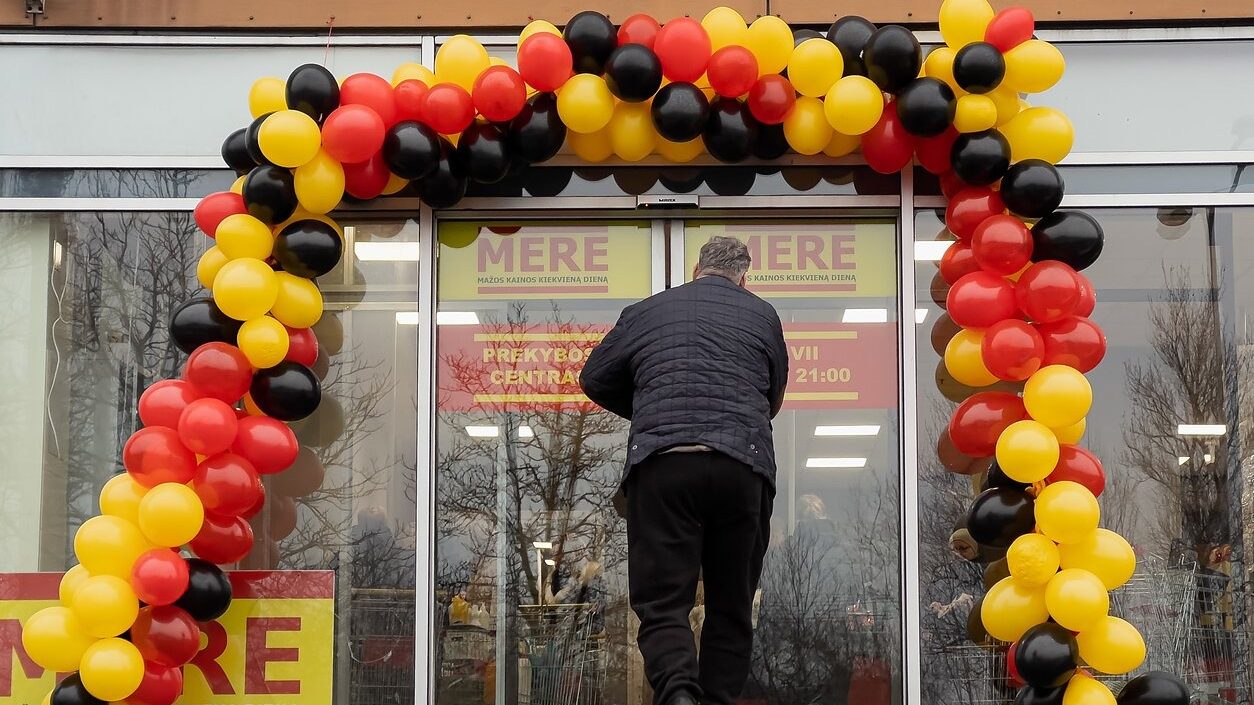
The Mere chain of low-price grocery stores stopped trading in Latvia in late July 2026 after the European Union's 21st sanctions package against Russia included its owner, Russian businessman Sergei Shnaider. Latvia's Financial Intelligence Unit said the sanctions applied to Latprodukti, the company operating the stores, and to the Latvian branch of Lithuanian company Valiente, and that both had to cease operations immediately.
Shnaider was listed for supporting actions that undermine Ukraine's territorial integrity, sovereignty and independence. According to reporting by BNS and Latvian public media, he indirectly owns more than half of both Latprodukti and Valiente's Latvian business. Latprodukti, set up in 2020 and owned through a Serbian-registered company, grew rapidly and reported 2024 revenue of €31.57m. The closures affected 12 stores in Riga, Liepāja, Tukums, Jēkabpils and other towns, and more than 100 employees. Mere stores in Lithuania also closed.
Economists interviewed by Latvian Radio were divided on the consequences. SEB economist Dainis Gašpuitis said the wider market would not be significantly affected, though some shoppers would need to change habits and nearby competitors could gain customers. Iveta Liniņa of Turība University argued that competition in Latvian retail was already limited and that consumers would lose out. Ilze Priedīte, a board member of the top! chain, disagreed, saying the largest players already offered low prices.
The sudden shutdown left suppliers exposed. Latvia's Traders' Association called on the government to help local producers recover money and goods frozen in the stores, and in August the authorities issued an administrative act allowing suppliers to reclaim goods held by the sanctioned companies.
Media in both Baltic countries later reported that stores under the Ola name had opened in some former Mere premises using similar marketing, prompting questions about possible links to the previous owners; no such link has been established.