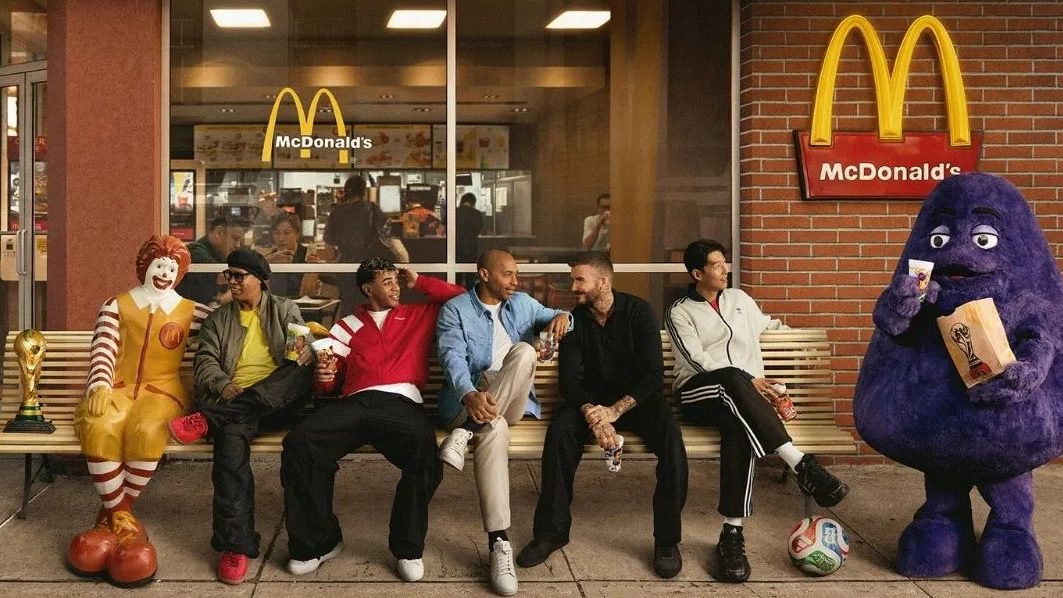
McDonald’s has decided to end its 32-year sponsorship relationship with the FIFA World Cup. Coming at a time when the company is restructuring its marketing model, the split opens a new chapter in the brand’s long-running partnership with one of the world’s biggest sporting events.
The decision came after McDonald’s ran its largest-ever campaign for the 2026 FIFA World Cup. According to the company, the campaign ran in more than 110 countries and was positioned as its most extensive marketing investment of 2026. However, the large-scale communications effort did not fully meet the company’s expectations in terms of commercial results.
Campaign Across More Than 110 Countries Fell Short of Expectations
McDonald’s 2026 World Cup campaign stood out as one of the biggest efforts showcasing the brand’s global marketing power. Created by New York-based advertising agency Wieden+Kennedy, the campaign reached consumers in more than 110 countries.
An event with mass appeal such as the World Cup offered McDonald’s an important opportunity not only to raise brand awareness but also to support restaurant traffic and sales. The global campaign was intended to engage consumers in different markets and contribute to the brand’s commercial performance.
However, comments made during the call on the company’s second-quarter financial results indicated that the excitement generated by the campaign did not translate into the expected commercial return to the same degree.
Slowing Growth in the US Played a Role
McDonald’s parting of ways with FIFA is not seen simply as the end of a sponsorship deal. Behind the decision also lie the difficulties the company has faced in achieving the commercial return it expects from its marketing spend.
According to McDonald’s financial disclosures for the second quarter of 2026, comparable restaurant sales rose 0.8% in the US and 1.3% globally. These results showed that growth, particularly in the US market, fell short of the company’s expectations.
On the results call, McDonald’s Chief Financial Officer Ian Borden said the FIFA campaign had made a positive contribution to the business and generated strong excitement across the restaurant network. However, Borden added that the campaign’s performance had fallen short of expectations.
Management’s assessment shows that marketing activity with broad reach is not enough on its own. Campaigns need to be measured not only on brand awareness and consumer engagement, but also on their impact on restaurant visits, sales and long-term growth.
McDonald’s Shifts from External Partnerships to Its Own Brand Assets
The end of the FIFA World Cup sponsorship points to a broader shift in McDonald’s marketing approach. Alongside the visibility it gains from major sporting events and pop culture partnerships, the company aims to put more weight on projects it can develop around its own brand.
Known in marketing as owned IP, this approach means a brand investing in its own intellectual property, original content, characters and consumer experiences. Rather than basing its communications solely on the popularity of other organisations or the entertainment world, the brand can create assets that it has developed itself and can use over the long term.
McDonald’s management’s approach suggests not abandoning major sponsorships altogether, but evaluating such investments more selectively. While events like the World Cup offer the chance to reach millions of consumers, it is not always guaranteed that this reach will turn into sustainable sales growth.
32-Year Partnership Ends at the Close of 2026
McDonald’s partnership with FIFA dates back to 1994. In 2023 the company renewed its agreement, running a partnership covering both the 2023 FIFA Women’s World Cup and the 2026 FIFA World Cup.
Under the partnership, the brand gained visibility at FIFA events and also ran various fan events and tournament-specific marketing activities. The campaign created for the 2026 World Cup was one of the most extensive marketing efforts of this long-running partnership.
The current agreement with FIFA is reported to expire at the end of 2026. McDonald’s is also reported to have taken the decision as part of a review of its marketing strategy, independently of the controversies surrounding FIFA. The company is expected to continue its investment in sport through other partnerships.
A New Era in Sponsorship: From Visibility to Commercial Results
McDonald’s decision is an important example of how global brands evaluate the marketing budgets they allocate to major sporting events. While events such as the World Cup give brands extensive international reach, the success of sponsorships is no longer judged solely on reach, visibility or campaign engagement.
The change brands bring about in consumer behaviour, their contribution to store and restaurant traffic, sales performance and long-term brand value also matter in investment decisions.
In McDonald’s case, the fact that a campaign run in more than 110 countries and described as the company’s biggest marketing effort of the year fell short of expectations shows that the commercial return on high-budget sponsorships needs to be assessed separately.
In this respect, the company’s decision to end its 32-year partnership with FIFA stands out not just as the close of a past collaboration but as a choice about the future of global marketing investment. McDonald’s greater focus on its own brand assets and direct consumer relationships in the coming period will be decisive in how its marketing budget is allocated.
Retail EMEA’s View
McDonald’s decision to end its FIFA World Cup sponsorship after 32 years raises an important debate about how the success of marketing investment should be measured in retail. Reaching millions of people globally, creating strong brand visibility and generating excitement among consumers are of course valuable. But how far these effects translate into sales and sustainable growth matters at least as much as reach.
The fact that the campaign run in more than 110 countries for the 2026 World Cup fell short of expectations, despite being McDonald’s biggest marketing effort of the year, highlights this distinction. Although the campaign may have had a broad impact in terms of brand communication, management’s assessment shows that marketing success cannot be measured by the size of a campaign alone.
For retail, the real issue is how well a brand can integrate the visibility provided by major sponsorships with its own customer experience. While it matters that consumers remember a campaign, that recall needs to turn into repeat purchases and brand loyalty. McDonald’s focus in its next phase on building more lasting consumer relationships through its own products and digital channels is therefore notable.
The development also carries an important message for retail brands: big-budget campaigns can create short-term excitement, but sustainable growth comes from strengthening a brand’s own value proposition and continually improving the experience it offers consumers.