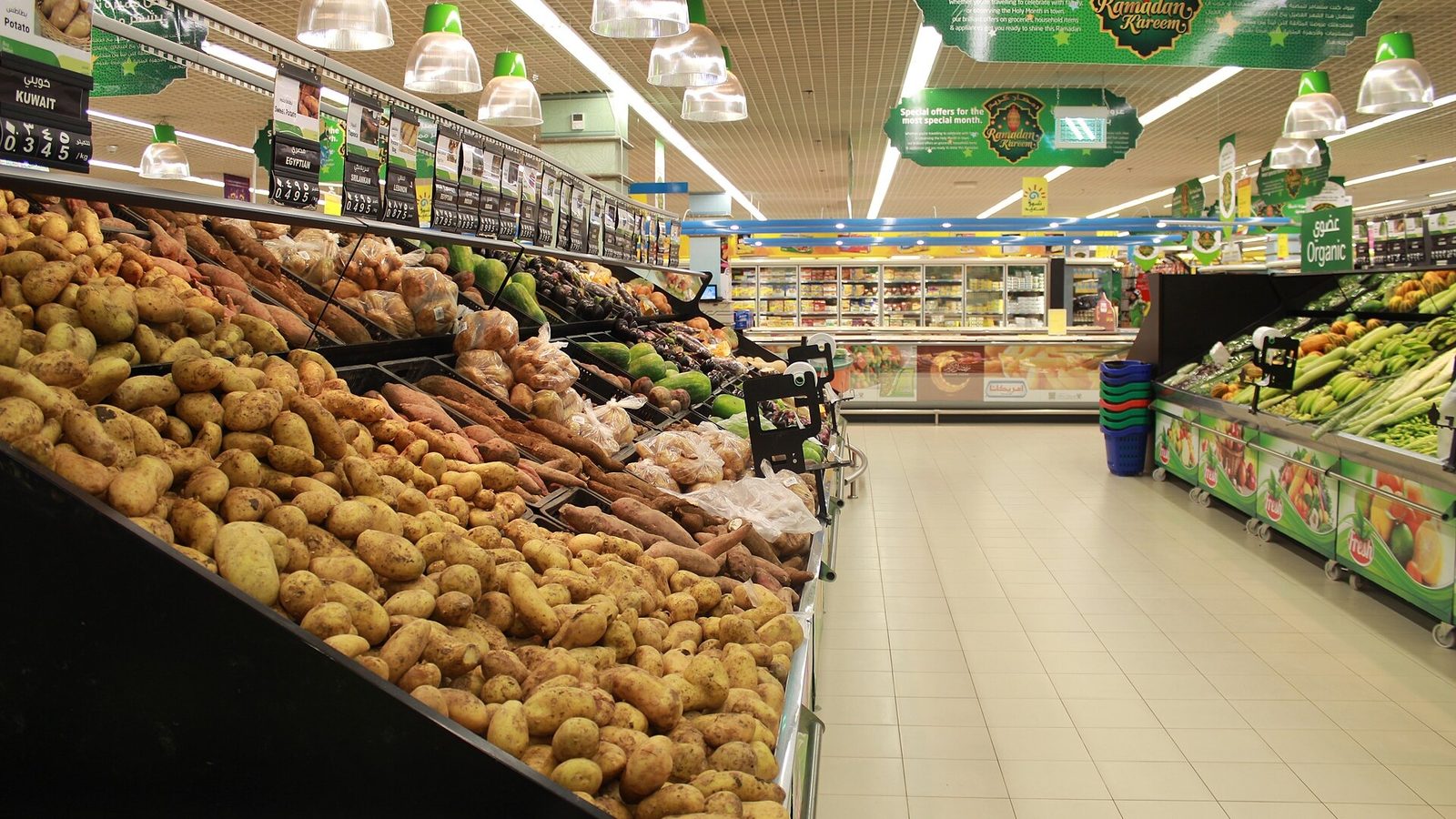
Kuwait has imposed a ceiling on food prices, ordering that retail prices for all food commodities may not exceed the levels charged to consumers before 28 February 2026. The ministerial decree was issued by Minister of Commerce and Industry Osama Boodai and reported by the Arab Times on 2 March.
Under the decree, prices in force before that date become the maximum allowable selling prices, and any increase requires special approval from the minister. Breaches are punishable under Law No. 10 of 1979 on the supervision of trade in goods. The ministry said the measure was intended to regulate markets, protect consumers, tighten oversight and prevent unjustified price increases, and that the government would continue to monitor local prices closely to protect purchasing power. A companion decision banned the export of food commodities to protect strategic stocks.
The 28 February cut-off coincides with the outbreak of hostilities involving Iran, which disrupted shipping routes and air links across the Gulf and prompted governments throughout the region to reassure consumers about supplies. Kuwait's Union of Consumer Cooperative Societies said goods remained available in cooperatives and supply centres, and officials urged shoppers not to stockpile.
The price freeze was followed by an extended enforcement campaign. Ministry figures reported in May showed inspectors recorded 2,063 violations relating to prices, advertising and fraud between 28 February and 30 April. On 26 May, Ministerial Decree No. 43/2026 created a central committee chaired by the ministry's undersecretary to monitor essential commodities, track inflation and supply chains, and approve and adjust prices in cooperative societies – a role previously handled by the cooperatives' own federation.
Cooperative societies play an outsized role in Kuwaiti grocery retail, accounting for a large share of food sales alongside private chains such as The Sultan Center, LuLu, HyperMax and Trolley. Bringing their pricing committee under ministry control gives the government more direct influence over the shelf prices most Kuwaiti households pay.
For retailers and suppliers, the cap limits their ability to pass on higher freight and insurance costs, a concern that importers raised as the conflict continued into the spring.