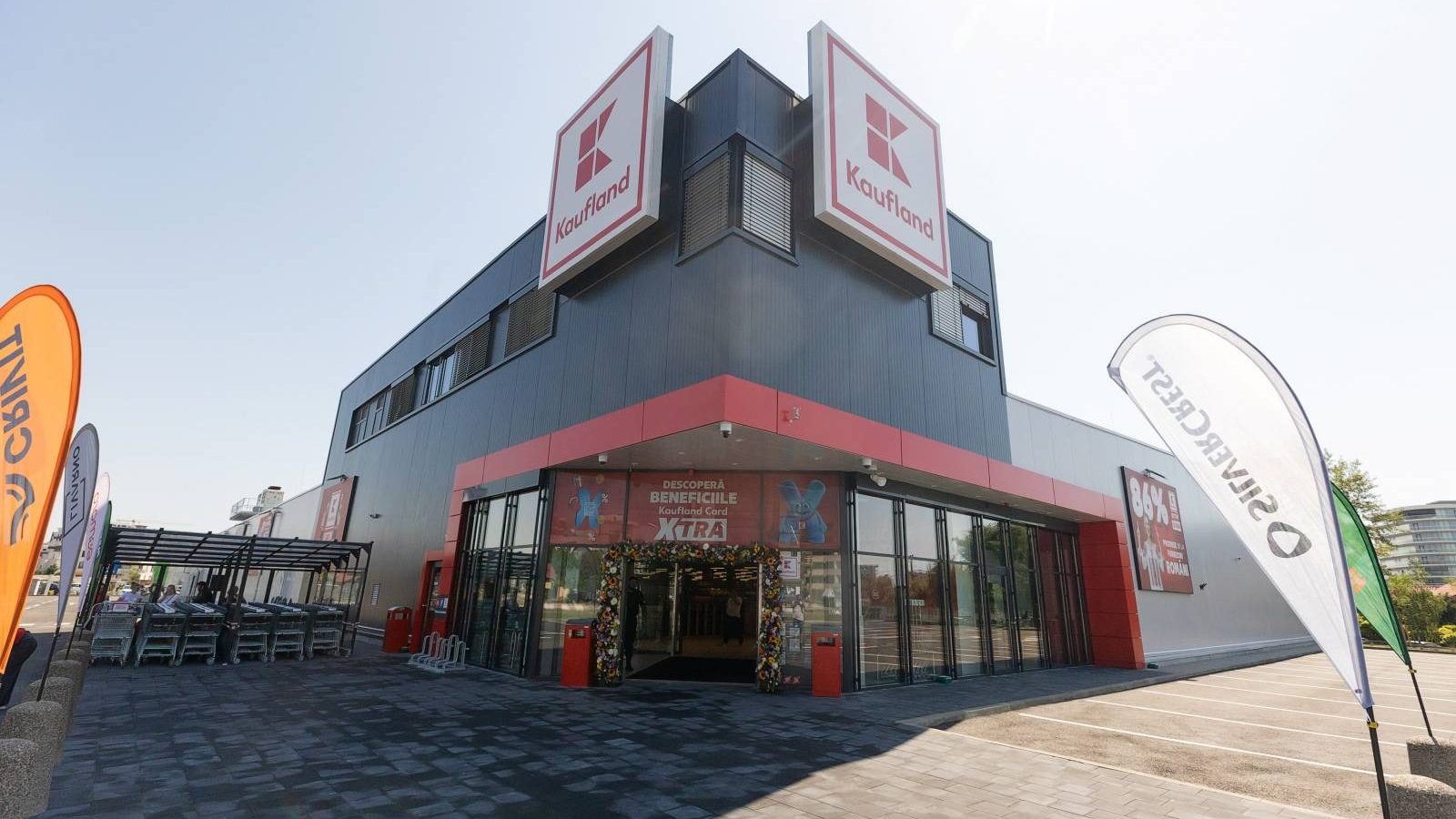
Kaufland Romania posted turnover of €4.2bn for its 2025 financial year, covering March 2025 to February 2026, according to figures published by the company in July as part of a socio-economic impact study.
The hypermarket operator, part of Germany's Schwarz Group, crossed the 200-store mark at the end of February, when it opened stores in Titu, Dâmbovița county, and Pantelimon, near Bucharest, on the same day, according to calculations by Ziarul Financiar. A further opening in Chitila, Ilfov county, in May took the network to 202 hypermarkets. Kaufland aims to reach 250 stores across Romania and Moldova by 2030, and it planned a three-month anniversary campaign around the 200-store milestone starting in August.
The company said its operations generated €2.9bn of gross value added in the year, about 0.8% of Romanian GDP, and that each euro of direct value added created a further €3.27 elsewhere in the economy. Kaufland employs more than 18,200 people directly and estimates that it supports over 131,000 full-time jobs including indirect and induced employment.
Kaufland works with more than 2,500 Romanian suppliers and said it spent more than €3.05bn with local businesses, over 80% of its purchasing. Capital expenditure on fixed assets in Romania amounted to €135m, and the retailer paid €374m in taxes. It also reported €9.6m of spending on community and ESG programmes and solar installations on more than 100 properties.
During the spring the retailer relaunched its loyalty scheme as Kaufland Card XTRA and continued a price-cut campaign covering more than 500 products. Kaufland is Romania's second-largest grocer by revenue behind sister chain Lidl, and the two Schwarz businesses together account for a large share of modern grocery sales in the country.