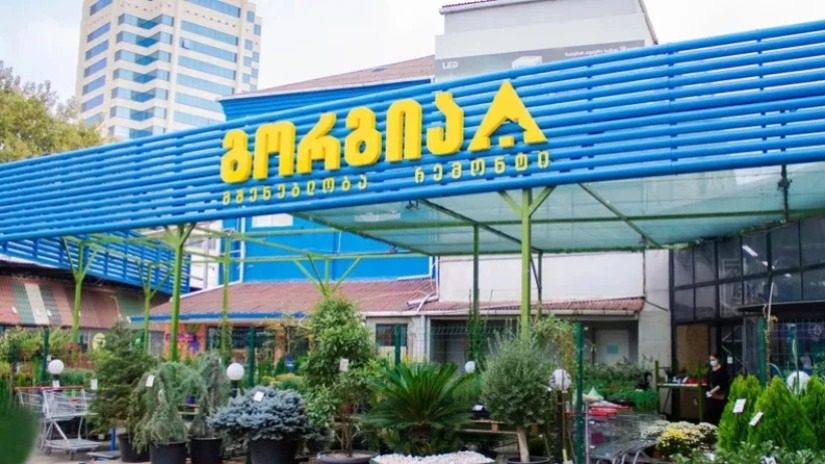
Gorgia, the Georgian home improvement and building materials hypermarket chain, is planning its most extensive domestic expansion in years. In an interview with Business Media Georgia in January 2026, chief executive Tornike Guruli said the company expected to open at least five new branches during the year.
Two of the new stores are planned for Tbilisi, where the chain already has several hypermarkets. The other three are due to open in Poti, Khashuri and Gurjaani, which Guruli described as three entirely new regions where Gorgia has not previously operated. He said work was already under way on the Poti branch, a Black Sea port town in the west of the country, while Khashuri lies in central Georgia and Gurjaani in the eastern wine-growing region of Kakheti. Investment figures for the new stores were not disclosed.
Guruli also outlined the company's international ambitions. Gorgia already does business in neighbouring Armenia and Azerbaijan and, according to the interview, now wants to move into the Gulf countries and Central Asia. Abroad, the company trades under a separate brand, Anta, which it uses in markets including Bulgaria, Azerbaijan and Armenia. Guruli has said the Gorgia name can carry different associations in different countries, which prompted the creation of the second brand.
The most significant foreign step so far came in June 2025, when the company opened a showroom in Yerevan, which it described as its largest retail facility outside Georgia and its first direct offer to Armenian consumers after years of serving business customers there.
Gorgia's push into smaller regional towns mirrors a broader trend in Georgian retail. Market research by Galt & Taggart and TBC Capital has shown that organised retail chains have a much lower share outside Tbilisi than in the capital, and that most new store openings in recent years have been in the regions, where competition from modern formats is still limited.
The company competes in the DIY and home improvement segment with other local hypermarket operators as well as a large number of traditional building-materials markets.