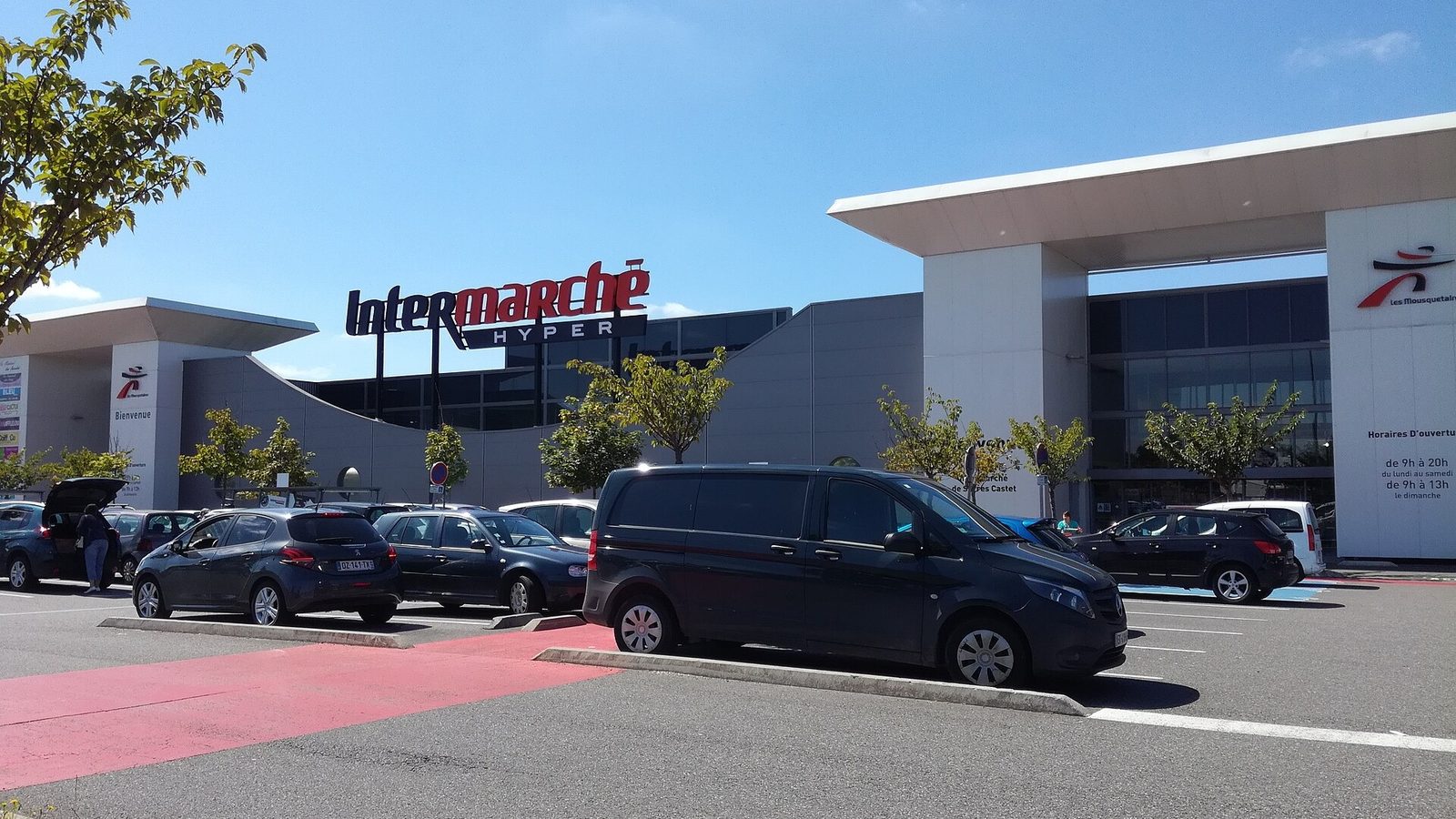
A cyberattack affecting hundreds of supermarkets in France has highlighted the new risks emerging in retail alongside digitalisation. Hackers took remote control of stores’ refrigeration systems and raised the temperatures of fridges and freezers to as high as 50°C. Large quantities of food were destroyed in the incident, which affected Intermarché, Coopérative U, Carrefour and other retail chains, and the economic loss across the sector could reach tens of millions of euros.
The attack, which French authorities are investigating, revealed that supermarkets face cybersecurity threats not only to payment systems, customer data and online sales infrastructure, but also to the physical systems that keep food safe.
Intermarché, Carrefour and Coopérative U also affected
The attack, which took place between the night of Sunday 11 October and the morning of Monday 12 October, targeted refrigeration systems at supermarkets in different regions of France.
According to reports by Reuters, AFP and The Guardian, the chains affected include the Les Mousquetaires group, which owns the Intermarché and Netto brands, Coopérative U and Carrefour. There were also reports that Leclerc and Monoprix stores were affected, while the store numbers given for each chain vary depending on the date and scope of the reports.
In a Reuters report dated 12 October, Carrefour said 80 of its stores had been affected. Monoprix said problems had occurred at 5% of its network of around 490 stores in France.
At Intermarché, initial statements pointed to 150–200 stores, while broader assessments that included Netto stores put the number of affected locations higher. Coopérative U CEO Dominique Schelcher said on 13 October that the attack had affected around 80 of its approximately 2,000 outlets.
The impact of the attack was not limited to technical failures in stores. Because the cold chain was broken, fresh and frozen products had to be withdrawn from sale. In some stores, operations were disrupted by the need to destroy products and restart refrigeration systems.
How did supermarket fridges heat up to 50°C?
The most striking aspect of the attack was that, rather than targeting tills or online stores directly, the hackers interfered with the stores’ refrigeration infrastructure.
Supermarket refrigeration systems often manage a large number of cabinets and freezers through a central control unit. These systems can monitor temperatures, set operating schedules and allow technical teams to carry out remote maintenance.
However, when adequate security measures are not in place, these internet-accessible control systems can also become an entry point for attackers.
According to Le Monde, in some stores the defrost cycle, which normally lasts around an hour, was extended to up to eight hours. Refrigeration temperatures were raised and, in some cases, alarm mechanisms were rendered ineffective in a way that delayed intervention.
Temperatures in some cold rooms were reported to have reached 50°C, and in one store equipment was reported to have been damaged by even higher temperatures.
This showed that a security flaw in a single technical system can have far-reaching consequences, from product stock in store to operational continuity.
Are Danfoss systems at the heart of the attack?
Initial assessments by French authorities pointed to a link between the attack and refrigeration control software developed by Danish technology company Danfoss.
Danfoss said it was aware of the incidents in France and that the affected systems were running older software versions. The company recommended that supported systems run up-to-date software and that end-of-life solutions be replaced with next-generation systems.
A notable detail is that vulnerabilities in the relevant product family had been publicly disclosed before the attack.
In a technical analysis published on 9 August 2026, cybersecurity company Claroty’s Team82 research group examined in detail vulnerabilities in the web management interface of the Danfoss AK-SM 800A control platform. The research identified flaws that, under certain conditions, could allow authentication to be bypassed and code to be executed remotely on the system.
Danfoss’s security advisories also state that software updates have been released for some vulnerabilities in the AK-SM 8xxA series.
That said, the publicly reported technical findings and the full details of the attack in France are not yet one and the same. Which systems the attackers accessed, by what method, and whether the incident was carried out using the same technical mechanism in all stores are among the questions the investigation needs to answer.
Tonnes of products destroyed for food safety
The most direct consequence of the attack for retail chains was product loss caused by the failure to maintain the cold chain.
Because putting products that had not been kept under proper refrigeration back on sale could pose a health risk, fresh and frozen food had to be destroyed in the affected stores.
In Le Monde’s report, the operator of an Intermarché store in Gradignan, in south-west France, said he had suffered a loss of around €21,000 at purchase cost. This was one example of the scale of damage at a single store.
Intermarché CEO Thierry Cotillard told the French media that losses across the country could reach tens of millions of euros in a single day. This figure is not a confirmed total for the whole sector but an estimate based on the executive’s initial assessment.
In addition to the destruction of products, restocking stores, completing technical checks, safely restarting refrigeration systems and returning sales operations to normal are generating further costs.
Moreover, food losses do not affect retailers alone. Producers, distributors, logistics companies and businesses that regularly supply the stores may also have to replan.
France opens investigation, European link examined
The Paris prosecutor’s office announced that an investigation had been opened into the large-scale cyberattack affecting the refrigeration systems of several major food retailers. The aims of the investigation include identifying the victims and establishing any link between the reported food losses and fires that occurred in some stores.
French Prime Minister Sébastien Lecornu also instructed ANSSI, the country’s national cybersecurity agency, to look into the matter.
French authorities are examining the possibility that the attack may also have affected businesses in other countries. A cyber threat intelligence expert speaking to Reuters listed Spain, Portugal, Poland, Germany and Belgium as potentially within the scope of the impact. However, based on current statements, it should not be regarded as a confirmed finding that the same attack took place in all of these countries.
Separately, Dutch retail group Ahold Delhaize reported on 12 October that it had experienced a cybersecurity issue and had taken some systems offline as a precaution. The company said there was as yet no reason to link that incident to the refrigeration attack in France.
So while incidents at different retailers across Europe are being closely monitored, it has not yet been confirmed that they are part of a single coordinated attack.
A new risk for retail: stores’ physical infrastructure
When it comes to cybersecurity, retailers tend to think first of customer data, payment systems, loyalty programmes, e-commerce platforms and supply chain software. The incident in France, however, shows how critical the relationship between digital security and physical store operations has become.
In modern stores, refrigeration, air conditioning, energy management, security cameras and building automation are increasingly managed through digital platforms. While remote monitoring and centralised management reduce operating costs, they also make securing these systems essential.
An attacker who gains access to a store’s point-of-sale system can halt sales. Access to its refrigeration system, however, can render products unusable, cause serious financial loss and directly affect food safety.
Retailers therefore need to assess not only their information technology infrastructure but also their operational technology within the same security framework. Internet-facing control panels, outdated software versions, third-party maintenance connections and inadequate network segmentation are among the key risk areas.
Retail EMEA’s View
The attack in France shows that digital transformation in retail can no longer be assessed solely in terms of customer experience, efficiency and sales growth. Smart store investments, centralised management systems and remote maintenance solutions bring retailers significant advantages. But when this infrastructure is not adequately secured, even one of a business’s most basic functions, keeping products in the right conditions, can be put at risk.
The incident has three important implications for retailers.
First, cybersecurity is no longer solely the responsibility of the IT department. Store operations, technical maintenance, the supply chain, food safety and senior management should all be part of the same risk assessment. The cost of a vulnerability in refrigeration systems can go far beyond a software update or a technical maintenance budget.
Second, legacy systems and supplier dependency must be managed more closely. A store’s refrigeration infrastructure may have worked without problems for years. But software no longer supported by the manufacturer, control units that have not been updated and remote access connections left open can create an invisible risk. Retailers need to track not only tills, servers and computers in their technology inventories, but all the connected equipment that runs a store’s physical operations.
Third, operational resilience is becoming part of competitive advantage. Avoiding attacks is, of course, the basic goal; but how quickly a problem is detected, how the damage is contained and how fast a store can resume operations matter just as much. Independent alarm mechanisms, network segmentation, secure remote access, up-to-date software and regular incident response drills are critical in this respect.
The final toll of the incident in France and the actors behind the attack are not yet clear. Even so, the picture that has emerged is an important warning for retail executives: the stores of the future will be more connected and smarter. Whether this transformation is sustainable will depend not only on how advanced the technology is, but also on how securely and resiliently it is designed.
Note: This report is based on information published by Reuters, The Guardian, Le Monde, AFP, Claroty Team82 and Danfoss as of 13 October 2026. Store numbers and loss estimates may vary according to statements reported by different outlets on different dates.