Croatia's grocery retail market generated revenues of €8.9bn in 2025, a nominal increase of 6.2% on the previous year, according to the Croatian Competition Agency's annual market survey, reported in September 2026. Growth slowed from 8.8% in 2024. Over the same period, food and non-alcoholic beverage prices rose by 5.1%, according to the Croatian Bureau of Statistics, implying only modest volume growth.
The largest retailers added 81 stores during the year, taking their combined network to 5,347 outlets, an increase of 1.5%, while net sales area grew 2.3% to about 1.67 million sq m. Supermarkets generated €4.7bn, or 53% of the market's revenue, and were the fastest-growing format with an increase of 7.6%. Studenac had the largest number of outlets, 1,487, most of them small neighbourhood stores.
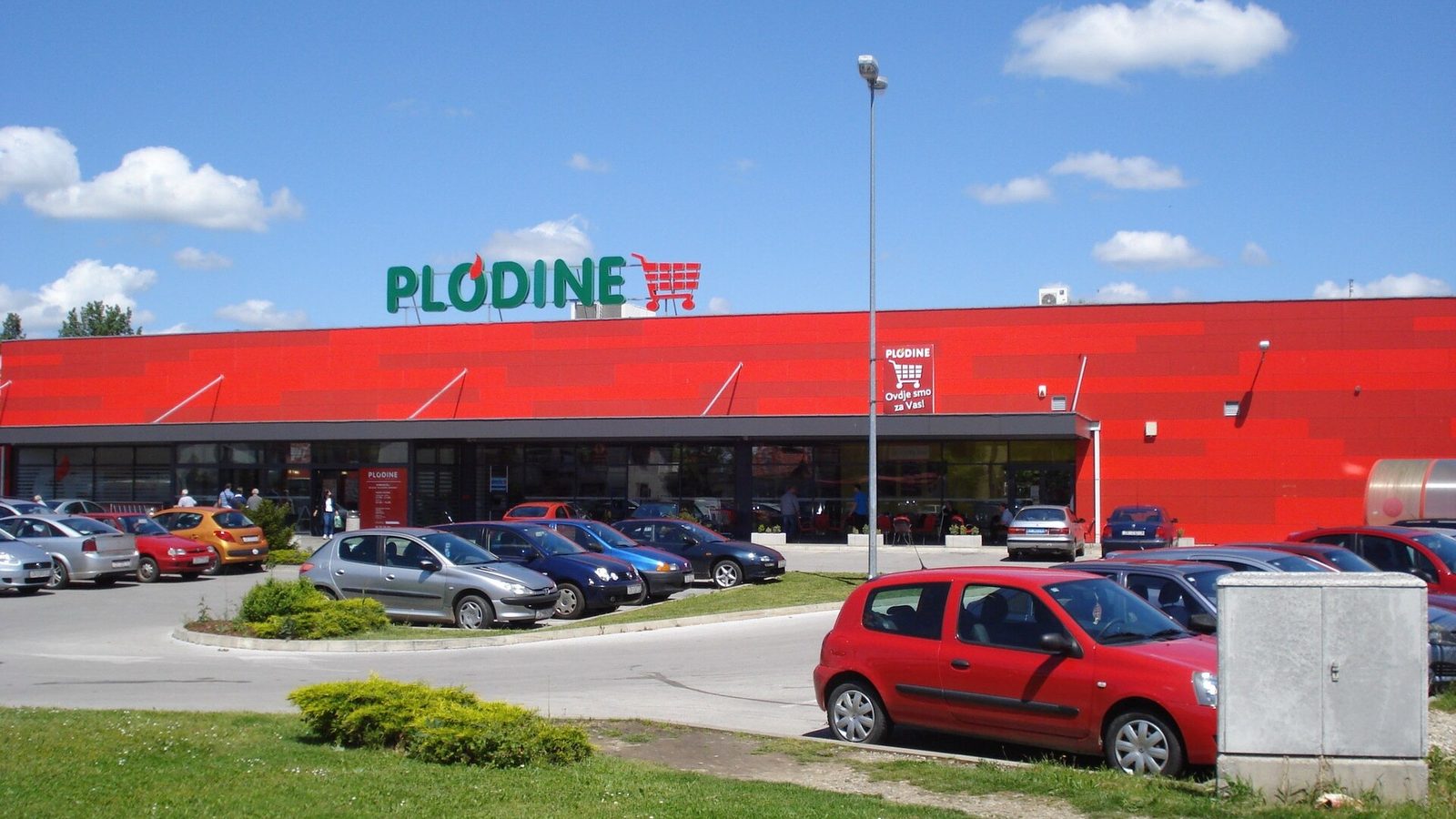
Konzum plus, part of Fortenova Group, remained the market leader with a share of between 20% and 30% and 630 stores, followed closely by Lidl. Schwarz Group, which owns Lidl and Kaufland, also held a combined share in the 20% to 30% range, and Lidl recorded the biggest increase in revenue in absolute terms, at more than €100m. The ranking of the top ten was unchanged: Konzum plus, Lidl, Plodine, Spar, Kaufland, Studenac, Tommy, KTC, NTL and Trgovina Krk.
The ten largest chains accounted for 87.7% of revenue, down 0.1 percentage points, and the top five for 66.2%. The agency calculated a Herfindahl-Hirschman Index of 1,408, which indicates a low level of market concentration.
Digital channels continued to develop. Seven retailers sold groceries online through their own platforms, with Konzum plus holding the largest share of online sales, and 16 retailers now run digital loyalty schemes.
The survey was published shortly before Studenac, the chain with the largest store network, filed for pre-bankruptcy proceedings.