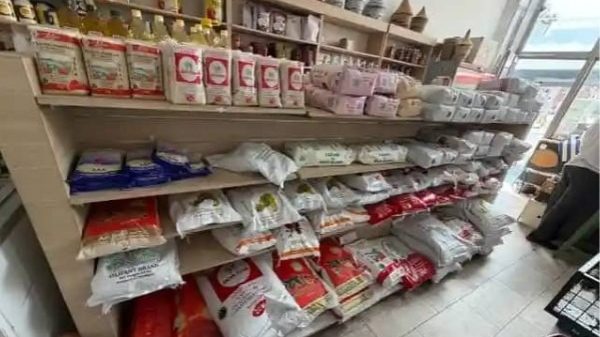
Côte d'Ivoire has launched a national campaign obliging retailers to display the capped prices of everyday consumer goods, as the government steps up its fight against the rising cost of living.
The operation was officially launched on 31 July in Marcory, Abidjan, by the Ministry of Commerce, Industry and Crafts through the Conseil National de Lutte contre la Vie Chère (CNLVC), according to news site Connection Ivoirienne. The ceremony was chaired by the CNLVC's executive secretary, Ranie-Didice Bah-Koné, and was carried out on the instruction of trade minister Kalil Konaté.
Under the scheme, supermarkets, convenience stores and other shops must display the maximum authorised prices of a list of staple products, including rice, sugar, cooking oil, tomato concentrate, pasta and baguettes. The aim is to inform shoppers of the regulated prices and to remind traders that the ceilings remain in force. Consumers are encouraged to check prices before buying and to report both overcharging and failures to display prices through the ministry's free hotline, 1343.
The campaign builds on price ceilings that the CNLVC announced at the end of December 2025 for staples such as rice, oil, meat and milk. In the months since, the authorities have stressed enforcement: in September the ministry gathered around a hundred inspectors in Abidjan for training on modernising market inspection methods, according to local press reports.
Official data suggest that inflation in Côte d'Ivoire has been moderate in 2026, with the national statistics agency reporting annual inflation of 1.2% in August, although fuel prices rose in May. Nevertheless, food prices remain a sensitive political issue, and visible price regulation in stores is a recurring government tool.
For retailers, mandatory display adds a compliance task and increases transparency on key value items. Large modern chains such as Prosuma, CFAO's Carrefour and Supeco stores, CDCI and Auchan already use shelf-edge labelling, but the requirement is likely to have more impact on the many small independent shops that make up the bulk of the country's grocery trade.