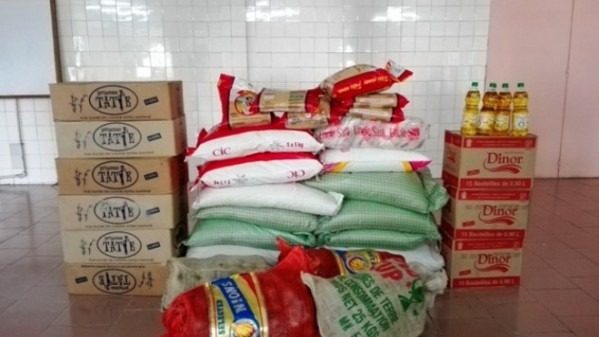
The government of Côte d'Ivoire has introduced price ceilings on a range of staple foods, including rice, cooking oil, meat and milk, in an effort to protect households from inflation, according to news site Koaci.
The measure was announced on 30 December 2025 by Ranie-Didice Bah-Koné, executive secretary of the Conseil National de Lutte contre la Vie Chère (CNLVC), the national council set up to tackle the high cost of living, in an interview with state broadcaster Radio Côte d'Ivoire. She said the caps had helped keep prices affordable and competitive across the country. The report did not detail the maximum prices or how long the ceilings would apply.
Bah-Koné presented the price controls as part of a broader set of measures. These include support for farmers through fertiliser distribution and help with marketing produce, the promotion of local consumption, and a programme to build 155 neighbourhood markets, of which more than 50 have been delivered so far. She also pointed to wage increases as part of the government's strategy to protect purchasing power.
For retailers, the caps mean tighter margins on some of their highest-volume products. Côte d'Ivoire has used price ceilings on essential goods several times in recent years, with the Ministry of Commerce, Industry and Crafts deploying inspectors to check compliance in markets and stores. In February 2026, the CNLVC said that capped prices were broadly being respected thanks in part to unannounced checks by a rapid inspection brigade, while acknowledging pressure on some imported products linked to insecurity in neighbouring Sahel countries.
Modern grocery retail in Côte d'Ivoire is led by Prosuma, CFAO's Carrefour and Supeco banners, CDCI and Auchan, alongside a dominant traditional trade of open markets and small shops. Price controls apply across all channels, but formal retailers, with visible shelf-edge pricing and electronic tills, are typically the easiest for inspectors to monitor.