Spending in Austria's grocery and drugstore channels reached €32.1bn in 2025, according to NielsenIQ's annual structural survey of the market published in May 2026. That represents an increase of €0.9bn, or 3.1%, on the previous year.
However, the research firm pointed out that inflation, measured by Statistik Austria at 3.6% for the year, outpaced sales growth, meaning that the market contracted slightly in real terms. Volumes, in other words, did not keep up with prices.
Food retail including the discounters generated €29.2bn, up 3.0%. The number of grocery stores fell by 54 to 5,065, while total selling space edged up 0.4% to roughly 3.56 million square metres. As a result, sales per square metre rose by around 2.5% to about €8,200. NielsenIQ said larger stores of more than 1,000 square metres were the main growth driver, confirming a long-running shift towards bigger formats.
Independent retailers, who operate stores under the banners of the large groups, performed particularly well. Their sales rose 5.0% to €3.9bn across 1,571 outlets, giving them 31% of the store count and a market share that climbed from 13.1% to 13.4%.
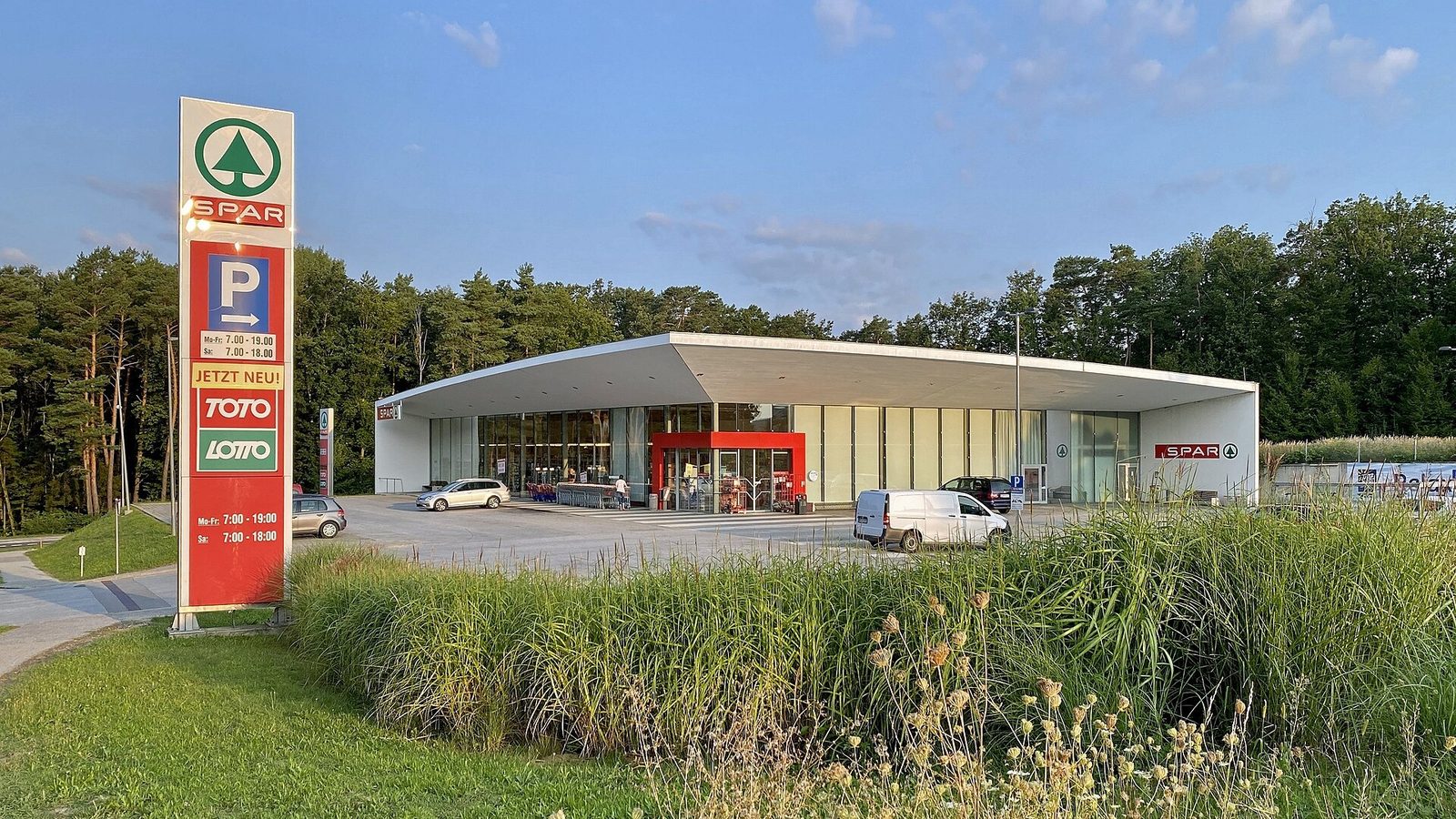
On the competitive front, Spar remained the market leader with a share of 36.3%, up half a point. The Rewe group, excluding its Bipa drugstores, held 32.4%, a decline of 0.5 points. Hofer and Lidl together reached 25.7%, also half a point higher, and NielsenIQ singled out Lidl as the fastest-growing retailer with a sales increase of 6.6%. The Markant grouping fell to 2.1%, mainly because of the closure of Unimarkt stores, while other operators including MPreis held 3.5%.
Drugstores, a channel dominated by dm, Bipa and Müller, again grew faster than grocery. Sales rose 3.7% to €2.8bn across 1,044 locations.
The figures come against a backdrop of intense political debate over food prices in Austria, where the government and consumer advocates have repeatedly argued that branded goods cost more than in neighbouring Germany.