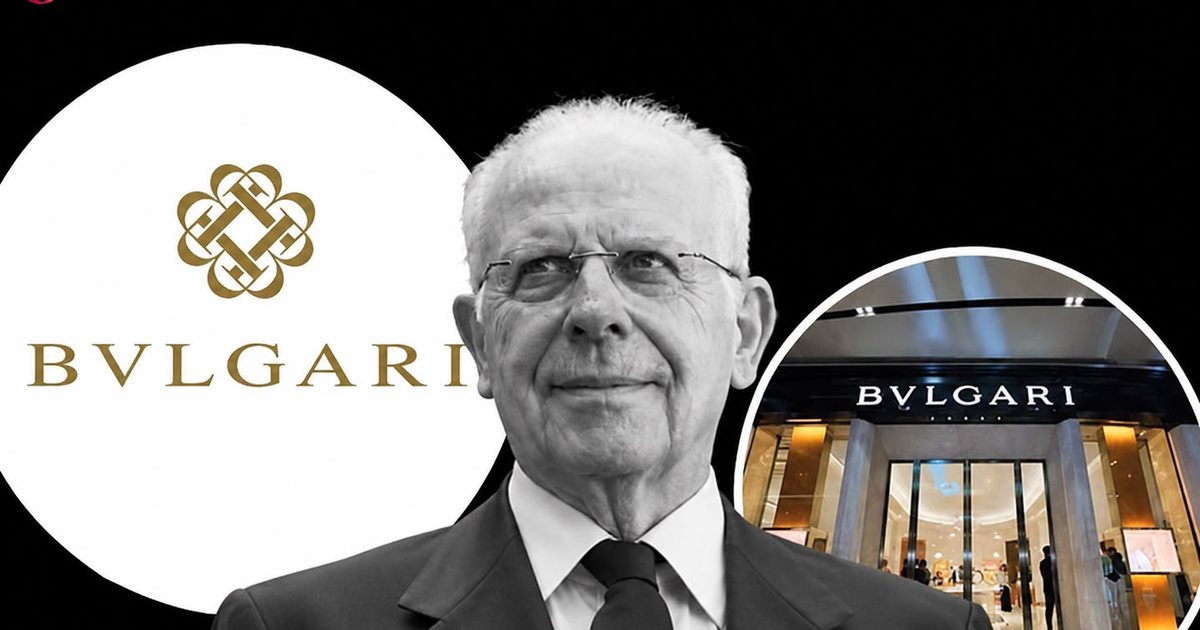
Paolo Bulgari, a key figure in the Italian jewellery industry and a third-generation member of the family behind BVLGARI, has died in Rome at the age of 89. He played a pivotal role in transforming the family’s traditional jewellery business into one of the world’s most recognised luxury brands, leaving a lasting mark on the Italian luxury industry.
His death was announced by his family on 21 November 2026. In their statement, they remembered him as “one of the greatest jewellers of our time”, highlighting his entrepreneurial spirit, humanity and deep love for Italy.
From a Family Workshop to a Global Luxury House
Born in Rome in 1937, Paolo Bulgari was part of the third generation of the family behind BVLGARI. The company’s story dates back to 1884, when his grandfather, Sotirio Bulgari, founded the jewellery business in the Italian capital.
Paolo joined the family business in 1960, initially working alongside his father, Giorgio. He developed particular expertise in precious gemstones, eventually earning international recognition for his knowledge and craftsmanship.
In 1984, he became chairman of BVLGARI, working closely with his brother Nicola Bulgari and nephew Francesco Trapani to expand the business internationally. Under their leadership, BVLGARI evolved beyond its traditional jewellery roots, broadening its portfolio to include watches, fragrances, leather goods and accessories.
Inspired by ancient Greek and Roman art, the brand developed a distinctive design identity that became synonymous with Italian luxury. Its ability to combine historical heritage with contemporary design helped establish BVLGARI as a major player in the global luxury market.
Expanding Beyond Jewellery: A Broader Luxury Retail Strategy
BVLGARI’s growth was closely linked to its expansion into new product categories. By moving beyond high-end jewellery into watches, fragrances, leather goods and accessories, the brand created new ways to engage with luxury consumers.
This diversification was more than a product strategy. It allowed BVLGARI to build a broader luxury offering while maintaining a consistent brand identity rooted in Roman culture and Italian craftsmanship.
The strategy also strengthened its position in the competitive international luxury retail market, where brand heritage, product diversity and customer experience play an increasingly important role.
The LVMH Acquisition: A Turning Point
One of the most significant milestones in BVLGARI’s history came in 2011, when the Bulgari family sold its controlling stake to French luxury group LVMH in a deal valued at approximately €3.7 billion.
The acquisition strengthened LVMH’s position in the jewellery and watch sector while opening a new chapter in BVLGARI’s international development.
Paolo Bulgari later described the decision as a painful one. Concerns about the company’s employees and the challenges of ensuring a successful generational transition were among the factors behind the family’s decision to relinquish control.
Despite the sale, Paolo remained closely connected to the brand and continued designing jewellery well into his later years.
A Personal Connection That Never Faded
Even after BVLGARI became part of LVMH, Paolo Bulgari maintained a strong personal relationship with the brand.
He regularly visited the historic BVLGARI boutique on Via dei Condotti in Rome, where he sometimes enjoyed standing behind the counter and interacting with customers. On occasion, he would simply introduce himself as a shop assistant.
His continued involvement reflected a personal attachment to the business that went far beyond ownership or management. Jewellery remained a lifelong passion, and his connection to the family’s legacy never faded.
Analysis: The Value of Heritage in Luxury Retail
Paolo Bulgari’s legacy offers an important example of how family heritage can become a global competitive advantage in luxury retail.
BVLGARI’s success was built not only on exceptional jewellery and precious gemstones, but also on its ability to translate Rome’s cultural identity into products, retail environments and brand experiences.
The 2011 acquisition by LVMH also highlights a broader question facing family-owned luxury businesses: Can a brand preserve its identity and heritage after moving beyond family ownership?
BVLGARI demonstrates that corporate scale and historical identity do not necessarily have to compete. With the right strategy, a luxury brand can retain its distinctive heritage while benefiting from the global reach, investment capacity and retail expertise of an international group.
Paolo Bulgari leaves behind a legacy that extends beyond jewellery design. His contribution helped transform a family business into one of the defining names in Italian luxury, securing BVLGARI’s place on the global retail stage.